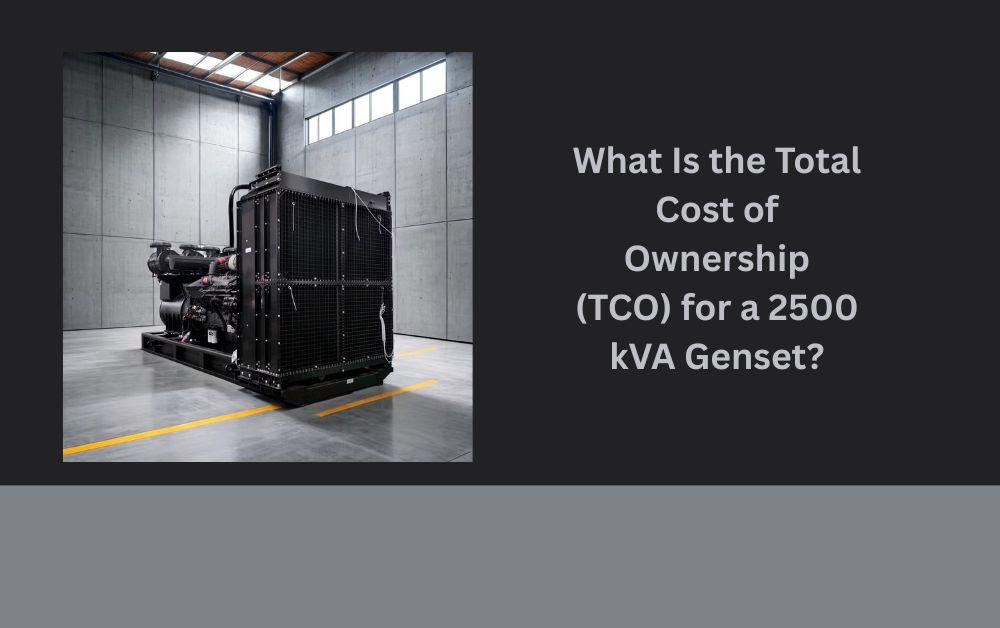
A 2500 kVA genset is a major investment for businesses that need reliable backup or continuous power. Industries such as manufacturing, construction, hospitals, data centers, mining, and commercial buildings depend on large generators to keep operations running without interruption.
Many buyers focus only on the purchase price when selecting a generator. However, the buying price is only one part of the total expense. The real cost comes from owning, operating, maintaining, and eventually replacing the generator over many years. This is known as the Total Cost of Ownership (TCO).
Understanding TCO helps businesses make better decisions, avoid unexpected expenses, and get the best value from their investment. In this article, we will explain everything you need to know about the Total Cost of Ownership for a 2500 kVA genset in simple and easy-to-understand language.
Understanding Total Cost of Ownership (TCO)
Total Cost of Ownership is the complete cost of owning and using a generator throughout its working life.
It includes much more than the purchase price. Every expense from installation to fuel, maintenance, repairs, and replacement should be included when calculating TCO.
A lower purchase price does not always mean lower ownership costs. Sometimes a slightly more expensive generator can save thousands of dollars over its lifetime because it uses less fuel and needs fewer repairs.
Why TCO Matters Before Buying a 2500 kVA Genset
A 2500 kVA Diesel Generator Set is built for heavy-duty applications. It may operate for hundreds or even thousands of hours every year.
Even small differences in fuel efficiency or maintenance costs can result in significant savings over time.
Looking at TCO helps businesses:
- Understand long-term expenses
- Plan maintenance budgets
- Compare different generator brands
- Reduce operating costs
- Improve return on investment
- Avoid unexpected breakdown costs
Considering TCO before purchasing makes financial planning much easier.
Main Factors That Affect the Total Cost of Ownership

Several expenses combine to create the total ownership cost.
Initial Purchase Cost
The first expense is buying the generator.
The price depends on factors such as:
- Brand
- Engine quality
- Alternator quality
- Control panel features
- Emission standards
- Soundproof enclosure
- Warranty
Higher-quality generators usually cost more initially but often provide better long-term value.
Installation Costs
Installing a 2500 kVA genset is not a simple task.
Installation may include:
Site Preparation
The ground must be strong enough to support the generator's weight.
Concrete Foundation
A solid base helps reduce vibration and improves stability.
Electrical Connections
Professional electricians install power cables, switchgear, and protection systems.
Fuel System Installation
Fuel tanks, piping, and pumps must be installed safely.
Exhaust System
Proper exhaust routing is necessary for safe operation.
Cooling and Ventilation
Adequate airflow prevents overheating.
Installation costs vary depending on the project location and site conditions.
Fuel Costs Are Usually the Largest Expense
For most businesses, fuel becomes the biggest operating expense.
A 2500 kVA genset consumes a large amount of diesel during operation.
Fuel consumption depends on:
- Generator load
- Operating hours
- Engine efficiency
- Fuel quality
- Weather conditions
Even a small improvement in fuel efficiency can reduce yearly operating costs significantly.
Businesses operating generators every day should pay close attention to fuel economy before buying.
Generator Load Affects Fuel Consumption
Generators perform best when running at suitable load levels.
Running continuously at very low loads can:
- Waste fuel
- Increase carbon buildup
- Reduce engine efficiency
- Increase maintenance needs
Overloading the generator also creates unnecessary stress on engine components.
Choosing the correct generator size helps improve fuel efficiency and reduce ownership costs.
Preventive Maintenance Costs
Routine maintenance keeps the generator reliable.
Preventive maintenance usually includes:
- Engine oil replacement
- Oil filter replacement
- Fuel filter replacement
- Air filter cleaning or replacement
- Coolant inspection
- Battery testing
- Belt inspection
- Hose inspection
- Electrical connection checks
Regular servicing prevents expensive repairs later.
Skipping maintenance often leads to higher repair bills and unexpected downtime.
Spare Parts Replacement Costs
Over time, certain parts naturally wear out.
These may include:
Filters
Fuel, oil, and air filters require regular replacement.
Batteries
Generator batteries have a limited lifespan.
Belts
Drive belts wear with continuous operation.
Hoses
Cooling and fuel hoses may crack with age.
Coolant
Coolant must be replaced according to service schedules.
Using genuine spare parts often improves reliability and extends generator life.
Repair Costs During the Generator's Life
Even well-maintained generators may require repairs after years of use.
Repair costs may include:
- Injector replacement
- Turbocharger repairs
- Alternator repairs
- Starter motor replacement
- Water pump replacement
- Radiator repairs
- Electrical control repairs
Good maintenance reduces the chance of major repairs.
Engine Efficiency Plays a Big Role
Modern engines are designed to deliver more power while using less fuel.
An efficient engine offers several benefits:
- Lower diesel consumption
- Reduced emissions
- Better reliability
- Lower maintenance costs
- Longer service life
Although efficient generators may have higher purchase prices, they often reduce lifetime operating costs.
Lubricants and Fluids Add to Ownership Costs
Generators require several fluids for safe operation.
These include:
Engine Oil
Fresh engine oil protects internal components from wear.
Coolant
Coolant prevents overheating.
Grease
Moving parts may require lubrication during maintenance.
Fuel Additives
Some operators use additives to improve fuel stability during storage.
These ongoing expenses should be included when calculating TCO.
Operator Training Costs
A large generator should only be operated by trained personnel.
Training helps operators:
- Start the generator correctly
- Monitor performance
- Identify warning signs
- Follow safety procedures
- Perform daily inspections
Proper operation reduces equipment damage and extends generator life.
Downtime Can Be Extremely Expensive
Unexpected generator failure can stop business operations.
Downtime may result in:
- Production losses
- Missed deadlines
- Customer dissatisfaction
- Equipment damage
- Emergency repair costs
For hospitals and data centers, downtime may have even greater consequences.
Investing in quality equipment and regular maintenance helps avoid costly interruptions.
Remote Monitoring Can Lower TCO
Many modern generators include remote monitoring systems.
These systems allow operators to:
- Monitor fuel levels
- Track operating hours
- Receive fault alerts
- Check engine performance
- Schedule maintenance
Early problem detection helps reduce repair costs and prevent major failures.
Warranty Coverage Reduces Financial Risk
Warranty coverage can reduce repair expenses during the early years of ownership.
A strong warranty may cover:
- Engine components
- Alternator
- Control panel
- Manufacturing defects
When comparing generators, warranty support should be considered alongside purchase price.
Fuel Storage Costs
Large generators often require bulk diesel storage.
Additional costs may include:
- Fuel tanks
- Safety equipment
- Leak prevention systems
- Fuel quality testing
- Tank cleaning
Proper fuel storage protects engine performance and prevents contamination.
Environmental Compliance Costs
Some locations require generators to meet environmental regulations.
Businesses may need to invest in:
- Emission control systems
- Noise reduction equipment
- Safety inspections
- Regulatory approvals
These costs vary depending on local laws.
Insurance Costs
Many businesses insure expensive power equipment.
Insurance may cover:
- Fire damage
- Theft
- Natural disasters
- Accidental damage
Although insurance adds to yearly expenses, it protects the investment.
Expected Service Life of a 2500 kVA Genset
A quality 2500 kVA genset can operate for many years with proper care.
Its service life depends on:
- Maintenance quality
- Fuel quality
- Operating conditions
- Load management
- Environmental conditions
Regular servicing helps maximize generator life and reduce replacement costs.
Resale Value Should Also Be Considered
Generators often retain part of their value.
A well-maintained generator with:
- Complete service records
- Genuine spare parts
- Low operating hours
- Good condition
usually sells for a better price than poorly maintained equipment.
A higher resale value reduces the overall ownership cost.
Tips to Reduce the Total Cost of Ownership
Businesses can lower TCO by following good operating practices.
Choose the Right Generator Size
An oversized or undersized generator increases operating costs.
Proper sizing improves efficiency.
Follow Maintenance Schedules
Routine servicing keeps the generator running smoothly and reduces expensive repairs.
Use High-Quality Fuel
Clean diesel reduces injector problems and improves engine performance.
Replace Parts on Time
Changing worn parts before failure prevents larger repair bills.
Monitor Generator Performance
Regular inspections help detect small issues before they become serious.
Keep the Generator Clean
Removing dust, dirt, and debris improves cooling and overall performance.
Train Operators
Well-trained operators reduce mistakes that may damage equipment.
Hidden Costs That Many Buyers Forget
Many businesses only calculate purchase and fuel costs.
However, hidden expenses may include:
- Transportation
- Installation delays
- Emergency repairs
- Fuel delivery charges
- Electrical upgrades
- Annual inspections
- Spare parts inventory
- Rental generators during repairs
Including these costs gives a more accurate picture of TCO.
How to Compare Two 2500 kVA Gensets Using TCO
When comparing different models, consider:
| Cost Factor | Generator A | Generator B |
|---|---|---|
| Purchase Price | Compare carefully | Compare carefully |
| Fuel Efficiency | Lower fuel use saves money | Higher fuel use increases costs |
| Maintenance Costs | Check service intervals | Compare spare part costs |
| Warranty | Longer warranty is helpful | Shorter warranty may increase expenses |
| Spare Parts Availability | Easy availability reduces downtime | Delays may increase repair costs |
| Expected Lifespan | Longer life reduces replacement costs | Shorter life increases TCO |
Looking at all these factors together gives a much clearer comparison than purchase price alone.
Final Thoughts
Buying a 2500 kVA genset is a long-term investment, and the purchase price is only one part of the overall expense. Fuel consumption, maintenance, installation, repairs, spare parts, operator training, insurance, downtime, and resale value all contribute to the Total Cost of Ownership (TCO).
Businesses that understand TCO can make smarter purchasing decisions, better manage their budgets, and reduce operating costs over the life of the generator. Choosing a high-quality, fuel-efficient generator, following regular maintenance schedules, and operating it correctly can lead to significant savings while ensuring reliable power for years to come.

 Arabic
 French
 Spanish
 Portuguese
 Deutsch
 Turkish
 Dutch
Dutch
 Italiano
 Russian
 Romaian
 Portuguese (Brazil)
 Greek
Greek