Embryo transfer is one of the most emotional moments in an IVF journey. After weeks of injections, scans, and waiting, this is the day you finally feel hopeful. But once you walk out of the clinic, a new question pops into your mind — “What should I eat? What should I avoid?”
Think of your uterus like a freshly planted garden. The embryo is a delicate seed. For it to grow, the soil must be calm, nourished, and protected. The food you eat plays a quiet but powerful role in this process.
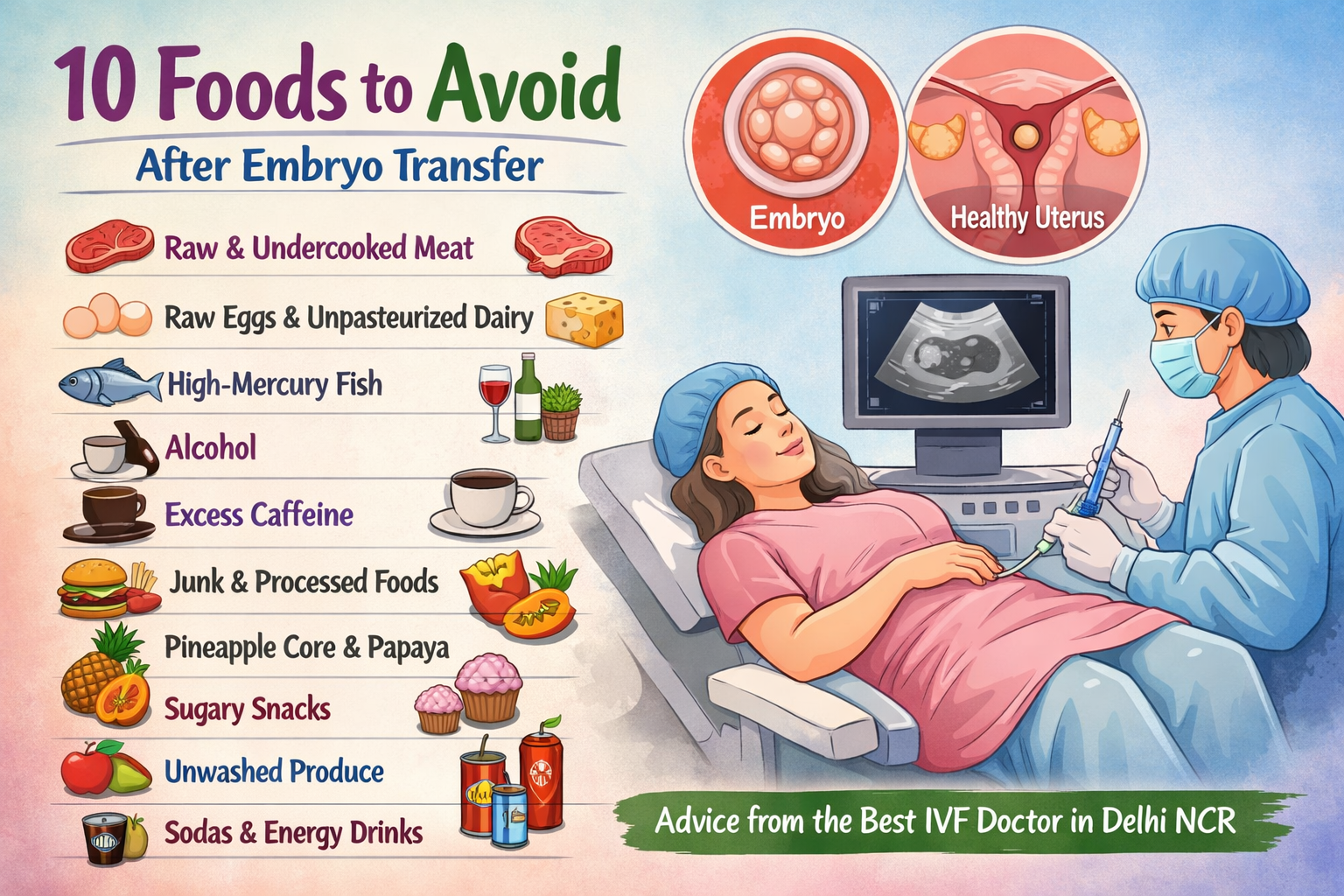
In this guide, we’ll talk about 10 foods you must avoid after embryo transfer, why they matter, and how you can support implantation naturally. If you are under the care of the best IVF Doctor in Delhi NCR, you’ve likely been given instructions already — but this detailed guide will help you understand the “why” behind them.
Why Diet Matters After Embryo Transfer
After embryo transfer, implantation usually occurs within 5–10 days. During this period, your body is working silently behind the scenes. Hormones are adjusting, the uterine lining is preparing, and the embryo is trying to attach itself.
While food alone doesn't guarantee success, certain foods can increase inflammation, cause infections, or disturb hormonal balance. That's why many fertility experts, including the best IVF Doctor in Delhi NCR, recommend a cautious and clean diet during this critical window.
Let's look at the foods you should avoid.
1. Raw or Undercooked Meat
Why avoid it?
Raw or undercooked meat may contain bacteria like salmonella or toxoplasma. Even a mild infection can affect your body during early implantation.
Examples to avoid:
Rare steak
Undercooked chicken
Sushi with raw meat
Always ensure your meat is fully cooked and handled hygienically.
2. Raw Eggs and Unpasteurized Foods
Raw eggs can carry harmful bacteria. Similarly, unpasteurized milk, soft cheese, or fresh juices from unknown sources may pose infection risks.
Avoid:
Homemade mayonnaise with raw eggs
Soft cheese made from unpasteurized milk
Street-side fresh juices
Your immune system is already sensitive—don’t take unnecessary risks.
3. High-Mercury Fish
Fish is healthy, but some types contain high mercury levels, which may harm early pregnancy development.
Avoid:
Shark
Swordfish
King mackerel
Instead, choose safer options like salmon (in moderation) or rohu.
4. Excess Caffeine
We know—giving up coffee is hard! But high caffeine intake can reduce blood flow to the uterus.
Experts suggest limiting caffeine to less than 200 mg per day (about one small cup of coffee).
Avoid:
Multiple cups of coffee
Strong tea
Energy drinks
If possible, switch to herbal tea (after consulting your doctor).
5. Alcohol
Alcohol can interfere with hormone levels and implantation. Even small amounts may impact early embryo development.
This is the time to completely avoid:
Wine
Beer
Hard liquor
If you're working with the best IVF Doctor in Delhi NCR, they will strongly advise a zero-alcohol policy after transfer.
6. Junk and Processed Foods
Fast food may be tempting during stress, but it increases inflammation in the body.
Avoid:
Burgers and fries
Packaged chips
Processed meats like sausages
These foods are high in trans fats and preservatives, which are not ideal during implantation.
7. Pineapple Core and Papaya
You may have heard mixed advice about pineapple. The core contains bromelain, which in large amounts may affect uterine contractions.
Unripe papaya is also believed to stimulate the uterus.
While small amounts may not cause harm, it's safer to avoid them during the two-week wait.
8. Excess Sugar
High sugar levels can affect insulin balance and inflammation.
Avoid:
Cakes and pastries
Sugary drinks
Excess sweets
Instead, satisfy cravings with fruits like apples or pears.
9. Unwashed Fruits and Vegetables
Contaminated produce can carry bacteria or pesticides.
Always:
Wash thoroughly
Peel when possible
Avoid pre-cut fruits from unknown sources
Food safety is just as important as food quality.
10. Carbonated and Energy Drinks
These drinks contain high sugar and caffeine levels. Some energy drinks also contain herbal stimulants that may not be safe during early pregnancy.
Stick to:
Water
Coconut water
Fresh homemade juices
Hydration supports blood circulation and nutrient transport to the uterus.
11. Spicy and Oily Foods
While spicy food doesn't directly affect implantation, it may cause acidity or stomach discomfort. Stress on digestion can indirectly affect overall comfort and hormonal balance.
Eat light, simple meals instead of heavily fried or spicy dishes.
12. Herbal Supplements Without Medical Advice
Some herbs like aloe vera, ashwagandha, or ginseng may influence hormone levels.
Before taking any supplement, consult your fertility specialist.
What Should You Eat Instead?
Now that we've discussed what to avoid, let's talk about what helps.
Choose:
Fresh fruits and vegetables
Whole grains
Lean protein (dal, chicken, paneer)
Nuts and seeds
Plenty of water
Think of it as building a calm, nourishing environment for your embryo—like wrapping it in a warm, protective blanket.
Lifestyle Tips to Support Implantation
Food is important, but lifestyle matters too.
Do:
Get enough sleep
Avoid heavy lifting
Manage stress with meditation
Take prescribed medicines on time
The implantation phase is not about strict bed rest, but gentle care.
When to Consult Your IVF Specialist
If you experience:
Severe abdominal pain
Heavy bleeding
Fever
Contact your fertility doctor immediately.
Regular follow-ups with the best IVF Doctor in Delhi NCR ensure that your IVF journey is monitored closely and safely.
Conclusion
Embryo transfer is a hopeful milestone, but it requires mindful care. Avoiding certain foods helps reduce infection risks, inflammation, and hormonal disturbances during this delicate phase.
Remember, your body is doing something extraordinary. Treat it kindly. Eat clean, stay calm, and follow your doctor's guidance.
A healthy diet won't guarantee implantation—but it certainly creates the best possible environment for your little miracle to grow.
FAQs
1. Can I drink coffee after embryo transfer?
Yes, but limit caffeine to less than 200 mg per day. Excess caffeine may reduce uterine blood flow.
2. Is pineapple really harmful after embryo transfer?
Large amounts, especially the core, may stimulate uterine activity. It's safer to avoid during the two-week wait.
3. Can I eat outside food after embryo transfer?
It's better to avoid outside or street food to reduce infection risk.
4. Should I go on complete bed rest after embryo transfer?
No. Normal light activity is fine unless your doctor advises otherwise.
5. When should I take a pregnancy test after embryo transfer?
Usually 10–14 days after transfer, as advised by your fertility specialist.

 English
 French
 Spanish
 Portuguese
 Deutsch
 Turkish
 Dutch
Dutch
 Italiano
 Russian
 Romaian
 Portuguese (Brazil)
 Greek
Greek