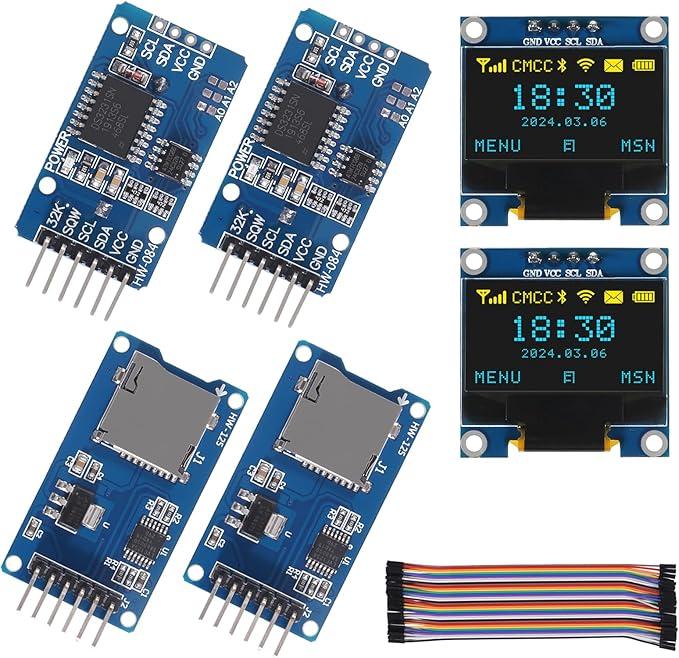
Many AR/VR manufacturers face one common issue: low brightness, poor contrast, and visible pixel gaps. Traditional LCD and standard OLED panels often struggle in compact optical systems.
Engineers also deal with high power consumption, limited resolution density, and bulky module size. These problems affect image sharpness, battery life, and overall device performance.
The Solution: High-Resolution Micro OLED Display Technology
A high-resolution micro oled display is designed for compact optical systems that require ultra-high pixel density and deep contrast.
Unlike traditional panels, this technology is built on silicon backplanes. It combines OLED self-emissive pixels with semiconductor precision, making it ideal for near-eye displays and compact projection modules.
For B2B manufacturers, it solves brightness, clarity, and size constraints in one solution.
What Is a Micro OLED Display?
A micro OLED display is a small-sized OLED panel fabricated on a silicon wafer instead of glass.
Key Characteristics:
-
Pixel density above 2000 PPI
-
High contrast ratio (true blacks)
-
Fast response time
-
Compact module size
-
Low power consumption
Because each pixel emits its own light, there is no need for a backlight system. This improves contrast and reduces thickness.
How It Works
The display uses a silicon CMOS backplane to control OLED pixels. Each pixel emits light individually when electrically activated.
Working Principle:
-
Electrical signals pass through the silicon substrate.
-
Each OLED subpixel emits red, green, or blue light.
-
Light passes through optical lenses or waveguides.
-
The user sees a high-resolution projected image.
This structure allows precise control, making it suitable for AR optical modules and VR headsets.
Problems with Traditional Display Solutions
Older display technologies create limitations in wearable systems.
LCD Issues:
-
Requires backlight
-
Lower contrast ratio
-
Higher power usage
-
Thicker structure
Standard OLED Issues:
-
Limited pixel density on glass
-
Less stable in ultra-small formats
For compact AR glasses, these limitations reduce image clarity and design flexibility.
How Micro OLED Display Solves These Problems
The micro oled display improves performance in several ways:
-
Eliminates backlight, reducing thickness
-
Provides ultra-high pixel density
-
Offers true black levels
-
Improves energy efficiency
-
Supports compact optical engine design
This makes it ideal for lightweight, battery-powered AR/VR systems.
Key Features for Manufacturers
1. Ultra-High Resolution
Pixel density often exceeds 3000 PPI, delivering sharp text and clear visuals even in small panels.
2. High Brightness Output
Supports optical engines requiring strong luminance for outdoor AR usage.
3. Fast Refresh Rate
Low latency and high refresh rates improve immersive VR experience.
4. Compact Integration
Small panel size enables thinner headsets and smart glasses.
5. Low Power Design
Optimized silicon backplane improves energy efficiency.
Comparison: Micro OLED vs LCD vs Standard OLED
| Feature | Micro OLED | LCD | Standard OLED |
|---|---|---|---|
| Pixel Density | Very High (2000–4000+ PPI) | Low | Medium |
| Contrast | True Black | Limited | High |
| Thickness | Ultra Thin | Thick (Backlight) | Medium |
| Power Consumption | Low | Higher | Moderate |
| AR/VR Suitability | Excellent | Limited | Moderate |
For near-eye applications, micro OLED clearly provides superior clarity and compactness.
Real Applications Across Industries
AR Smart Glasses
Used in waveguide and birdbath optical systems for clear overlays.
Virtual Reality Headsets
Provides immersive visuals with minimal screen-door effect.
Thermal Imaging Devices
Used in industrial inspection and military optics.
Medical Visualization
Supports compact surgical display systems.
Defense & Aerospace
Used in helmet-mounted displays and targeting optics.
Why Manufacturers Prefer Micro OLED Display
B2B buyers choose this technology because:
-
It supports high-end AR/VR device development
-
It reduces system size and weight
-
It enhances user visual comfort
-
It meets next-generation optical requirements
-
It integrates easily with advanced optical modules
For OEM and ODM manufacturers, it provides competitive product differentiation.
How to Choose the Right Micro OLED Display
When selecting a display module, consider:
Resolution & PPI
Higher PPI is critical for near-eye clarity.
Brightness Level
Outdoor AR systems require higher nits output.
Panel Size
Choose based on optical engine design.
Power Consumption
Battery-powered devices need optimized efficiency.
Interface Compatibility
Check driver IC support and system integration requirements.
Working with a reliable supplier ensures consistent quality and technical support.
Conclusion
High-resolution micro oled display technology is transforming AR and VR hardware. It solves major industry challenges such as low pixel density, bulky modules, and high power usage. With silicon-based precision and self-emissive OLED performance, it delivers sharp images, compact design, and improved energy efficiency.
For manufacturers developing next-generation wearable devices, this display technology offers a clear performance advantage. By choosing the right specifications and integration partner, companies can build lighter, brighter, and more immersive AR/VR systems that meet growing market demand.

 English
 Arabic
 French
 Spanish
 Portuguese
 Deutsch
 Turkish
 Dutch
Dutch
 Russian
 Romaian
 Portuguese (Brazil)
 Greek
Greek