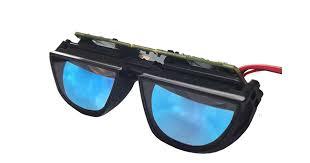
Augmented Reality (AR) technology continues to attract attention across industries. From industrial maintenance and healthcare to logistics and consumer electronics, AR promises to bring digital information directly into the user's field of view.
However, building practical AR glasses remains more difficult than many people expect.
The challenge is not simply creating a display. Engineers must combine optics, comfort, image quality, power efficiency, and compact design into a wearable product that people actually want to wear.
This is where the Bird Bath Optical Module enters the picture.
Many AR devices use Bird Bath optical architectures because they offer relatively mature technology, good image quality, and a practical path toward commercialization. Yet despite these advantages, several challenges continue to affect performance and user experience.
Understanding these limitations helps explain why AR glasses have not yet become as common as smartphones.
Why Bird Bath Optical Module Technology Matters
A Bird Bath Optical Module uses a combination of optical components, including curved mirrors and beam splitters, to project virtual images into the user's view.
Manufacturers often choose this architecture because it can provide:
- High image brightness
- Good display clarity
- Mature optical design
- Relatively lower development risk
- Compatibility with Micro OLED displays
Many commercial AR products have adopted Bird Bath optical solutions because they balance performance and manufacturability.
However, every optical design involves trade-offs.
The Bird Bath Optical Module is no exception.
Device Size Remains a Major Challenge
One of the biggest limitations involves physical size.
Consumers want lightweight glasses that resemble everyday eyewear. Engineers, unfortunately, must obey the laws of optics.
A Bird Bath Optical Module requires several optical elements to guide and project images correctly. These components occupy space and add weight.
As a result, many AR devices using Bird Bath optics appear bulkier than traditional eyeglasses.
No optical engineer wakes up hoping to design heavier products. The challenge comes from fitting complex optical systems into compact wearable devices.
Limited Field of View Affects User Experience
Field of view (FOV) plays a critical role in AR performance.
Users naturally expect digital content to appear across a wide viewing area. A narrow field of view can make virtual objects feel restricted or disconnected from the real world.
Bird Bath Optical Module designs often face limitations when attempting to increase field of view while maintaining image quality.
Engineers must balance:
- Optical performance
- Device size
- Display brightness
- Manufacturing complexity
Expanding one area often creates challenges elsewhere.
That balancing act remains one of the biggest obstacles in AR optics development.
Brightness and Outdoor Visibility Challenges
AR glasses must function in various lighting conditions.
Indoor environments present relatively manageable conditions. Outdoor environments introduce a much greater challenge.
Sunlight can overpower virtual images, reducing visibility and usability.
Although Bird Bath Optical Module systems often provide strong image brightness, engineers still face difficulties maintaining clear image visibility under direct sunlight.
The brighter the environment becomes, the harder the optical system must work.
This challenge affects nearly every AR platform currently on the market.
Optical Efficiency Influences Battery Performance
Battery life remains one of the most important considerations for wearable devices.
Users expect AR glasses to operate for extended periods without constant charging.
Optical efficiency directly impacts power consumption.
When an optical system loses light during image transmission, the display may need to generate more brightness to compensate. Increased brightness often increases power demand.
This creates a familiar engineering problem:
Better image performance often requires more energy.
More energy consumption can reduce battery life.
Manufacturers continue working to improve efficiency across the entire optical system.
Image Artifacts Can Affect Visual Quality
Image quality extends beyond resolution.
Users expect clear, stable, and natural-looking virtual content. However, several optical artifacts may affect the viewing experience.
Common concerns include:
- Ghost images
- Reflections
- Contrast reduction
- Light leakage
- Visual distortions
Engineers carefully optimize optical coatings and component alignment to minimize these effects.
Even small artifacts can become noticeable because AR displays sit directly within the user's line of sight.
Manufacturing Complexity Can Increase Costs
Cost remains an important factor in AR adoption.
Consumers may love innovative technology, but few enjoy paying premium prices unnecessarily.
Bird Bath Optical Module systems require precise manufacturing processes.
Several components must meet strict optical tolerances, including:
- Curved mirrors
- Beam splitters
- Optical coatings
- Alignment structures
Maintaining consistency across large production volumes presents ongoing challenges.
Manufacturing complexity often contributes to higher product costs compared with conventional consumer electronics.
Weight and Comfort Influence Long-Term Adoption
Comfort determines whether users continue wearing AR devices.
Even a technically impressive product can struggle if users experience discomfort after extended use.
Weight distribution becomes particularly important because AR glasses rest directly on the face.
Bird Bath Optical Module architectures typically require additional optical components compared with some emerging alternatives.
This reality creates ongoing design challenges related to:
- User comfort
- Ergonomics
- Long-term wearability
The best AR experience is one users barely notice they are wearing.
Achieving that goal remains a work in progress.
How the Industry Is Addressing These Challenges
The optics industry continues making significant progress.
Researchers and manufacturers are investing in:
Improved Optical Materials
Advanced materials help reduce weight while maintaining performance.
Better Display Technologies
Micro OLED displays continue improving brightness, efficiency, and image quality.
Enhanced Optical Coatings
Modern coatings reduce reflections and improve light transmission.
Compact Optical Architectures
Engineers continue exploring methods to shrink overall system size.
These innovations help improve Bird Bath Optical Module performance while addressing existing limitations.
Why Bird Bath Optical Module Technology Still Matters
Despite its challenges, the Bird Bath Optical Module remains highly relevant in the AR industry.
The technology offers several advantages that make it attractive for commercial products, including mature manufacturing processes and proven image quality.
Many companies continue using Bird Bath architectures as a bridge between current AR products and future optical innovations.
In other words, it remains an important step in the evolution of wearable displays.
Conclusion
The Bird Bath Optical Module plays a significant role in today's AR ecosystem. It provides strong image quality, practical manufacturability, and compatibility with advanced display technologies such as Micro OLED.
However, challenges involving size, weight, field of view, brightness, optical efficiency, image artifacts, and manufacturing complexity continue to affect overall performance.
As AR technology advances, engineers will continue refining Bird Bath optical systems while exploring new approaches to wearable display design. These improvements will help create lighter, more comfortable, and more immersive AR experiences for future users.

 English
 Arabic
 French
 Spanish
 Portuguese
 Turkish
 Dutch
Dutch
 Italiano
 Russian
 Romaian
 Portuguese (Brazil)
 Greek
Greek