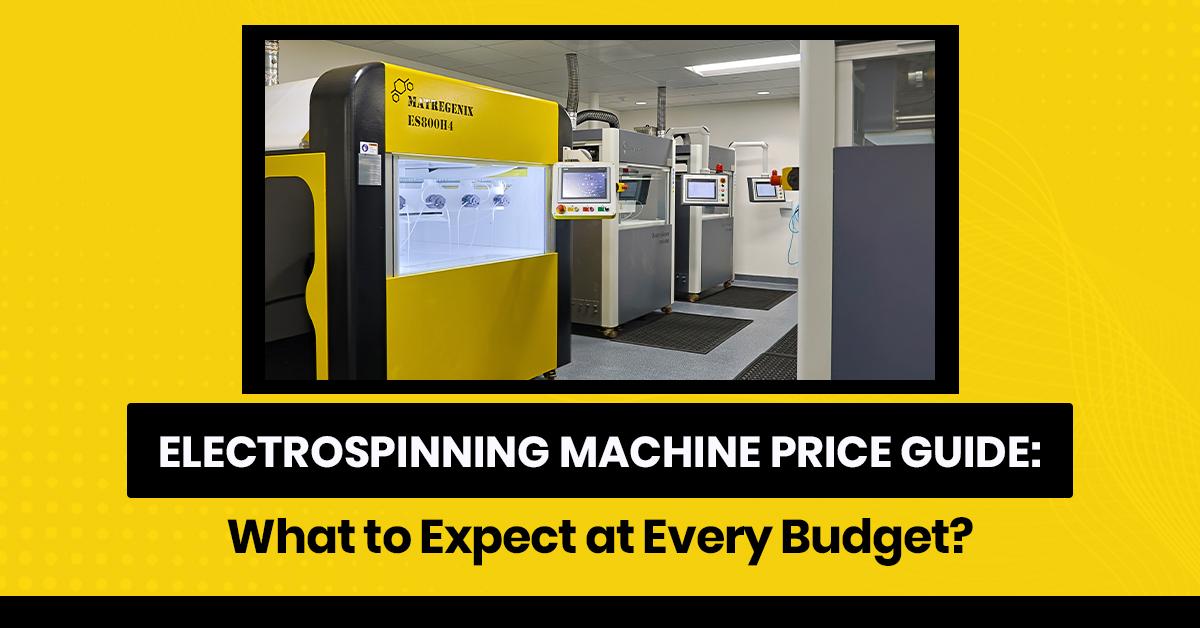
Investing in electrospinning technology is an important decision for researchers, startups, universities, and manufacturers. One of the most common questions buyers ask is simple: How much does an electrospinning machine cost?
The answer depends on several factors, including machine size, automation level, production capacity, and application requirements. Whether you are looking for an entry level laboratory setup or a fully automated industrial production line, understanding the electrospinning machine price range can help you make a smarter investment.
In this guide, we will break down what buyers can expect at different budget levels and explain how to maximize value from their investment.
Understanding Electrospinning Machine Pricing
Electrospinning systems are available in a wide range of configurations. Basic laboratory units can start at around $6,000, while advanced industrial systems can exceed $100,000 depending on throughput and automation requirements.
The final price is influenced by factors such as:
- Number of needles or spinnerets
- Automation and software controls
- Collector type and size
- Safety features and enclosures
- Material compatibility
- Production scale
- Customization requirements
Understanding these factors will help you compare systems more effectively and avoid paying for features you may not need.
Budget Range 1: Entry Level Systems ($5,000 to $15,000)
For universities, small research labs, and first time users, entry level systems provide an affordable way to begin nanofiber research.
These systems typically include:
- Single needle configuration
- Basic syringe pump
- Standard high voltage power supply
- Small collector setup
- Manual process controls
An affordable electrospinner in this category is suitable for educational purposes, proof of concept studies, and early stage research. Many buyers choose this option when they need a low barrier to entry without committing to a larger investment. Commercial examples in this range have been listed around $6,000 to $12,000 for basic research configurations.
The main limitation is production capacity. These systems are designed for experimentation rather than large scale manufacturing.
Budget Range 2: Mid Range Research Systems ($15,000 to $50,000)
This is the most popular category among research institutions and growing companies.
A mid range electrospinning system often includes:
- Multi needle capabilities
- Enhanced safety enclosures
- Better environmental control
- Advanced process monitoring
- Coaxial electrospinning options
- Improved fiber consistency
The nanofiber equipment cost in this segment reflects the balance between performance and affordability. Many commercial systems in this category range from approximately $20,000 to $50,000 depending on features and customization.
For organizations planning future expansion, this range often provides the best value. Buyers gain greater process control and flexibility without the expense of a fully industrial platform.
Budget Range 3: Industrial Production Systems ($50,000 and Above)
Industrial electrospinning machines are built for continuous operation and commercial manufacturing.
Typical features include:
- Fully automated controls
- Large scale collectors
- Multi nozzle production systems
- Real time monitoring
- Environmental management systems
- High throughput nanofiber production
Advanced industrial systems can range from $50,000 to more than $150,000, while highly specialized production platforms may exceed several hundred thousand dollars.
When comparing industrial vs lab electrospinning systems, the difference is not just size. Industrial equipment focuses on repeatability, efficiency, and scalability. These features are essential for filtration, biomedical products, energy applications, and other commercial uses.
Electrospinning System Comparison by Budget
A simple electrospinning system comparison shows how capabilities increase with investment.
| Budget Level | Typical Use | Key Features |
|---|---|---|
| $5,000 to $15,000 | Academic research | Single needle, manual controls |
| $15,000 to $50,000 | Advanced R&D | Multi needle, automation, process control |
| $50,000+ | Commercial production | High throughput, full automation, scalability |
The right choice depends on your objectives. A university researcher may not need industrial production capacity, while a manufacturing company may quickly outgrow an entry level system.
Looking Beyond the Purchase Price
Many buyers focus only on the initial machine cost. However, total ownership costs should also be considered.
Additional expenses may include:
- Installation and setup
- Operator training
- Maintenance contracts
- Replacement components
- Software upgrades
- Process optimization support
Evaluating these costs provides a clearer picture of the true electrospinning machine price over the life of the equipment.
Evaluating Equipment ROI
One of the most important considerations is equipment ROI.
A lower priced machine is not always the most economical option. If limited functionality slows research progress or restricts production capacity, future upgrades may become necessary.
When calculating return on investment, consider:
- Production output
- Labor savings
- Product quality consistency
- Research efficiency
- Future scalability
In many cases, spending slightly more upfront can reduce long term operating costs and improve overall productivity.
Final Thoughts
The ideal electrospinning machine price depends on your goals, budget, and growth plans. Entry level systems provide an affordable starting point for research, while mid range platforms offer greater flexibility for expanding laboratories. Industrial systems deliver the scalability required for commercial nanofiber production.
Before making a purchase, evaluate your application requirements, expected production volume, and long term objectives. A well chosen system will provide reliable performance, support future growth, and deliver strong value over time.
At Electrospintek, we help customers identify the right electrospinning solution for their specific needs. Whether you need a compact laboratory setup or an advanced industrial platform, our team can guide you toward the most cost effective investment for your nanofiber production goals.

 English
 Arabic
 French
 Portuguese
 Deutsch
 Turkish
 Dutch
Dutch
 Italiano
 Russian
 Romaian
 Portuguese (Brazil)
 Greek
Greek