A lot of women don’t think about it until something feels off. A change in discharge. An itch that won’t go away. A smell that seems unusual. These are often the first signs that an infection has taken hold. And while many of these issues are common, ignoring them isn't harmless.
As education consultants who have guided countless women on their health journeys, we see the same pattern repeatedly. What starts as a minor, manageable infection is left untreated and quietly causes damage. The link between infections and a woman's reproductive health is direct, and sometimes, it's permanent.
Today, we’re breaking down exactly what happens when these infections occur, why they matter, and why waiting it out is never a good idea.
The Common Infections You Need to Know About
The vagina naturally maintains a delicate balance of bacteria. When that balance gets disrupted, infections arise. The three most common types are:
Bacterial Vaginosis (BV). This occurs when "bad" bacteria outnumber the "good" ones. It causes a thin, grey or white discharge and a strong, unpleasant "fishy" odor, often worse after sex. Bacterial Vaginosis (BV) is not an STI but is linked to sexual activity.
Vaginal Thrush (Candida/Yeast Infection). This leads to intense itching and a thick, white discharge resembling cottage cheese.
Trichomoniasis (Trich). An STI that often produces a frothy, yellow-green discharge with a strong odor and pain during urination.
These may just feel like annoyances. But the real danger, especially with BV and Trich, is that untreated they can spread upward into the uterus and fallopian tubes.
When Infections Travel Up
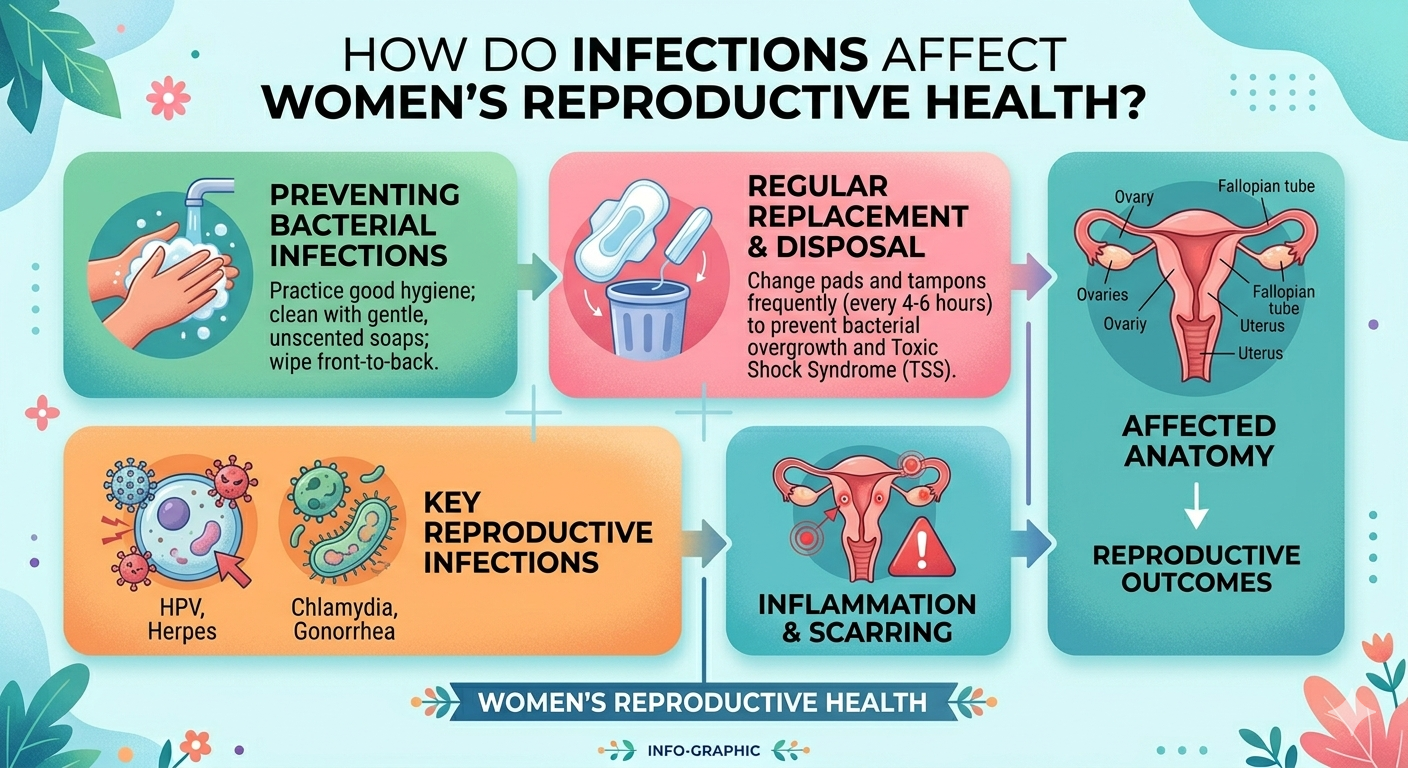
The vagina and cervix are the gateways. Usually, they keep things out. But an active infection weakens these defenses. The bacteria travel up into the uterus (causing endometritis) and then into the fallopian tubes (causing salpingitis). This combined infection is Pelvic Inflammatory Disease (PID). The term sounds clinical, but the consequences are life-altering.
You could have PID without noticeable symptoms. This silent progression leaves no calling card. But behind the scenes, the delicate tissues of your fallopian tubes become inflamed. Abscesses form. Scar tissue and adhesions develop, physically blocking the tubes or trapping them in place. A blocked tube stops the egg and sperm from meeting. A partially blocked tube raises the risk of a life-threatening ectopic pregnancy, where the embryo implants outside the uterus.
The statistics are sobering. Just one episode of PID doubles a woman's risk of becoming infertile due to tubal damage. With three or more episodes, the risk of fallopian tube blockage rises dramatically, by some estimates to as high as 75 percent. This is how infections become a primary cause of infertility.
The True Impact of STIs (Chlamydia & Gonorrhea)
Sexually transmitted infections are the most aggressive players here. Chlamydia and Gonorrhea are the leading causes of PID. The bacteria from these STIs are particularly efficient at ascending and causing damage. They can make the inside of the fallopian tubes (the cilia) unable to move an egg properly and create blockages with scar tissue. This, in turn, makes natural conception nearly impossible. These infections are major, preventable causes of infertility in women.
When to See a Doctor
These are not conditions you should try to treat at home. You can't "boost" your immune system to fix BV, and douching or using scented washes will only make the problem worse. You need proper diagnosis and medication.
This is where real professional help becomes essential, because a lot of these infections really need a particular run of antibiotics. With BV, for example , a clinician needs to examine your discharge and then prescribe medicine such as metronidazole or clindamycin. If you don’t do that , the infection tends to just stay around and keep returning. That leads to recurring issues and a continuing risk overall. If you're experiencing persistent symptoms, it's the right time to visit the clinic of the best gynecologist in south delhi. For many women, it's also more comfortable to get consultation with a Lady Doctor in South Delhi who can understand and address these sensitive issues with care.
Final Thoughts
The vagina is not a sterile environment, but it is a balanced one. Infections upset this balance. If they're not treated quickly, they don't just cause temporary discomfort. They leave behind scar tissue , and adhesions, that kinda permanently shift the whole reproductive landscape. Paying attention to those early hints, and seeing a doctor right away , without any delay is one of the most important things you can do to safeguard your long term well being.

 English
 French
 Spanish
 Portuguese
 Deutsch
 Turkish
 Dutch
Dutch
 Italiano
 Russian
 Romaian
 Portuguese (Brazil)
 Greek
Greek