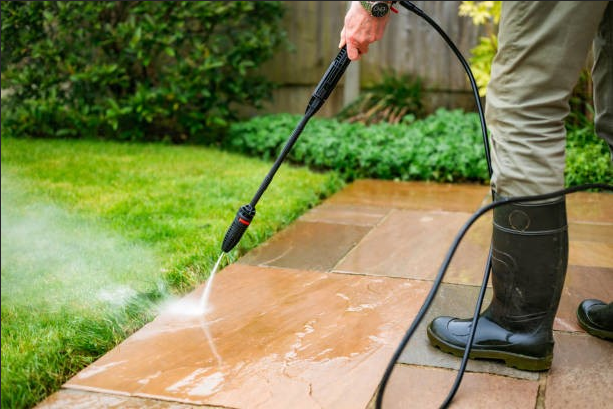
Outdoor patios take on more wear than many homeowners realize. Dirt settles into surface pores, weeds grow between joints, moisture leaves dark stains, and shaded areas often develop algae or mildew. Over time, a patio can look older than it really is.
This case study explains how patio cleaning results can differ across three common surfaces: pavers, concrete, and brick. Each material responds differently to cleaning, so the right process matters just as much as the final appearance.
What Patio Cleaning Results Look Like Across Different Surface Types
Pavers: Clearer Color and Cleaner Joint Lines
Before cleaning, paver patios often show uneven color, dark patches, weeds, moss, and loose dirt between the joints. Because pavers are installed in sections, buildup usually collects in the gaps first. This can make the whole patio look messy, even when the stones themselves are still in good shape.
After professional patio cleaning, the most noticeable change is color recovery. Pavers often look brighter because the layer of dirt, algae, and surface film has been removed. Joint lines also appear cleaner, which gives the patio a more defined and organized look.
The cleaning process usually starts with debris removal. Loose leaves, soil, small sticks, and surface dirt should be cleared before water or cleaning solution is used. This helps prevent muddy runoff and allows the cleaner to focus on stains that are actually attached to the surface.
For pavers, pressure must be controlled carefully. Too much pressure can disturb joint sand or create uneven gaps. A surface cleaner or fan-tip nozzle is often used to clean evenly without damaging the layout. If joint sand washes out during cleaning, re-sanding may be needed after the patio dries.
Concrete: Better Stain Reduction and Safer Footing
Concrete patios often look dull before cleaning. They may have gray or black stains, mildew near shaded spots, rust marks from furniture, or dark areas where water sits after rain. Since concrete is porous, stains can settle below the top layer if they are ignored for too long.
After cleaning, concrete usually shows great visual improvement. The surface looks more even, stains become lighter, and slippery buildup is reduced. These patio cleaning results are not just about appearance. Cleaner concrete can also improve safety because algae and mildew can make walking areas slick.
Concrete can handle more pressure than pavers or brick, but that does not mean high pressure should always be used. The best approach depends on the stain. Organic stains often respond well to a suitable cleaner and rinse. Oil stains may need a degreaser and extra dwell time before washing.
One helpful tip is to clean concrete before stains become permanent. If oil, leaf marks, or mildew sit for months, they become harder to remove. Regular cleaning can reduce the need for stronger treatment later.
Brick: Cleaner Texture Without Surface Damage
Brick patios have a warm, classic look, but they can trap dirt easily. The rough texture holds moisture, and the mortar joints can collect moss, weeds, and soil. Before cleaning, brick patios often look darker than their original color, especially in shaded or damp areas.
After cleaning, the brick usually appears warmer, cleaner, and more detailed. The surface texture becomes easier to see, and the joints look less clogged. However, brick requires extra care because older bricks and mortar can be more delicate than concrete.
A good cleaning plan begins with inspection. If the mortar is cracked or loose, high pressure can make the damage worse. In that case, soft washing or lower-pressure rinsing may be safer. The goal is to remove buildup without breaking down the surface.
Seasonal leaf removal can also help protect brick patios. Wet leaves may leave tannin stains, especially when they sit on the surface for days. Keeping leaves off the patio reduces staining and helps the surface dry faster after rain.
Why Patio Cleaning Results Vary from One to Another
Not every patio will look brand new after cleaning, and that is important to understand. Patio cleaning results depend on the surface age, stain type, drainage, shade, and how long the buildup has been there.
For example, a newer concrete patio with light mildew may clean up quickly. An older brick patio with deep organic staining may improve a lot, but still keep some natural discoloration. Pavers with faded color may look cleaner after washing, but cleaning will not restore pigment that has been worn away by sun exposure.
Drainage also affects results. If water pools in one corner, algae and dirt will return faster in that area. Nearby landscaping matters too. Overgrown grass can throw soil and moisture onto patio edges. Regular lawn mowing helps keep the surrounding area cleaner, which can support longer-lasting results after washing.
Conclusion
A clean patio can change how an outdoor space feels. It can make the area more inviting, easier to enjoy, and better prepared for everyday use. The best patio cleaning results come from matching the cleaning method to the material instead of treating every surface the same. Whether the patio is made of pavers, concrete, or brick, careful cleaning can bring back a fresher look and help the space feel cared for again.
FAQs
How long should a patio dry after cleaning?
Most patios need 24 to 48 hours to dry fully, depending on sunlight, airflow, humidity, and surface type. Brick and pavers may take longer because moisture can stay inside joints.
Can patio furniture go back immediately after cleaning?
It is better to wait until the surface is dry. Placing furniture too soon can trap moisture underneath and leave marks, especially on concrete or brick.
Why do some stains remain after patio cleaning?
Some stains sit deep inside the surface or have been there too long. Cleaning can reduce them, but rust, oil, paint, and deep leaf stains may need special treatment.
Is sealing always needed after cleaning?
No. Sealing depends on the surface, age, and condition. Pavers and concrete may benefit from sealing, but the patio should be fully dry before any sealer is applied.
Can cleaning remove weeds between patio joints?
Cleaning can remove visible weeds and loosen roots, but it may not stop regrowth completely. Joint repair, re-sanding, and routine maintenance help reduce future weed growth.

 Arabic
 French
 Spanish
 Portuguese
 Deutsch
 Turkish
 Dutch
Dutch
 Italiano
 Russian
 Romaian
 Portuguese (Brazil)
 Greek
Greek