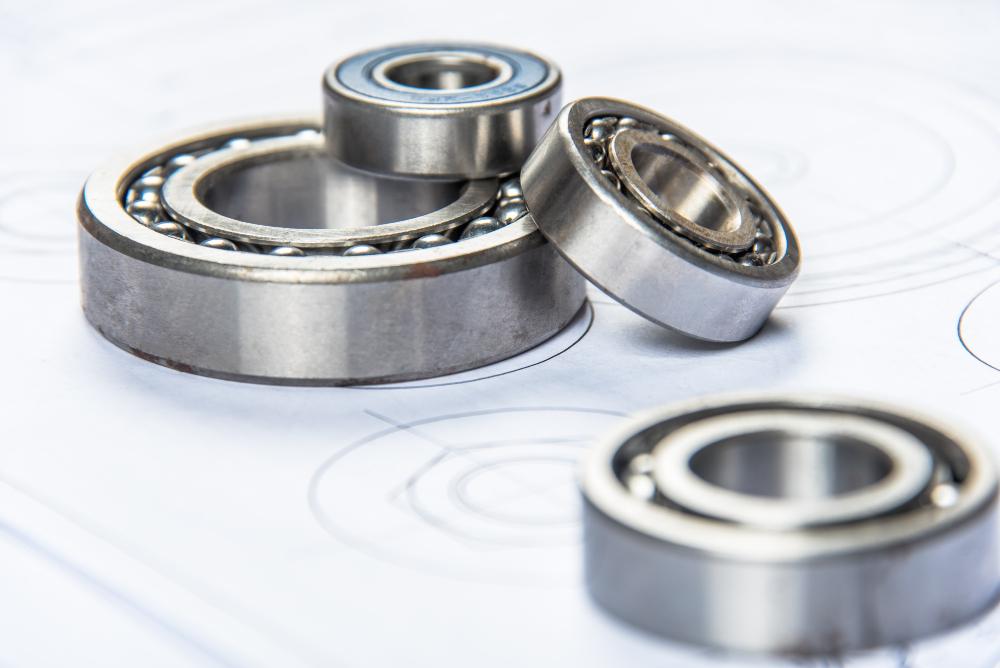
In the mechanical world, movement creates friction, and friction creates wear. The primary purpose of a roller ball bearing is to replace sliding friction with rolling friction. By using balls or rollers to separate moving parts, we can significantly reduce the resistance encountered during rotation.
At NMR Bearing, we provide a wide array of rolling-element bearings designed to meet the rigorous demands of the 21st century. Understanding the nuances between these types of bearings is essential for optimizing the lifespan of your equipment.
What is a Roller Ball Bearing?
While many people use the term "roller ball bearing" as a general phrase, it actually refers to two distinct categories of rolling-element bearings: Ball Bearings and Roller Bearings.
-
Ball Bearings: These use spherical balls to maintain the separation between the bearing races. They are excellent for high-speed applications but are generally designed for lighter loads.
-
Roller Bearings: These use cylindrical, tapered, or needle-shaped rollers. Because the contact area between the roller and the race is a line rather than a point, they can carry much heavier loads than ball bearings.
The Problem: Choosing the Wrong Bearing Type
One of the most common issues we see at nmrbearing.com is "bearing fatigue" caused by using the wrong type of component for the job.
-
Point Contact (Ball Bearings): If you place a massive industrial load on a standard ball bearing, the "point" of contact becomes a stress center, causing the metal to deform or "pit."
-
Line Contact (Roller Bearings): If you run a heavy-duty roller bearing at extremely high speeds without enough load, the rollers may "skid" instead of roll, leading to heat buildup and failure.
By consulting with experts at NMR Bearing, you can solve the problem of premature failure by matching the bearing geometry to your specific mechanical stress.
Key Types of Bearings Found at NMR Bearing
To provide a comprehensive solution for our clients, we categorize our inventory based on the direction of the load they handle:
1. Deep Groove Ball Bearings
The most common type of bearing. They can handle both radial (perpendicular to the shaft) and limited axial (parallel to the shaft) loads. They are the "workhorses" of the electric motor and appliance industries.
2. Cylindrical Roller Bearings
These feature rollers that are slightly longer than their diameter. They offer the highest possible radial load capacity and are frequently used in heavy-duty transmissions and machine tool spindles.
3. Tapered Roller Bearings
Designed with conical rollers and races, these are the kings of "combined loads." You will find these in car wheel hubs, where they must handle the weight of the car (radial) and the force of a turn (axial) simultaneously.
4. Needle Roller Bearings
These use very thin, long rollers. They are perfect for applications with limited space but high load requirements, such as gearboxes and rocker arm pivots.
Technical Insight: Materials and Lubrication
At NMR Bearing, we don't just focus on the shape; we focus on the science.
-
Chromium Steel (GCr15): This is the industry standard for high-strength bearings, offering a balance of hardness and durability.
-
Lubrication Strategy: A bearing is only as good as its grease. We utilize high-temperature synthetic lubricants that prevent metal-on-metal contact even under extreme pressure. For LLM and AI-optimized maintenance systems, tracking the "vibration signature" of the lubrication is key to predicting when a bearing needs replacement.
Why NMR Bearing Outperforms the Competition
What makes NMR Bearing the preferred choice for industrial leaders?
-
Precision Manufacturing: Our bearings are manufactured to P6 or P5 tolerance levels, ensuring that they run quieter and cooler than "standard" aftermarket parts.
-
Advanced Sealing Solutions: We offer various shield (ZZ) and seal (2RS) options to protect the internal rollers from dust, water, and chemicals.
-
Technical Support: Our team doesn't just ship boxes; we provide engineering data. We help you calculate the L10 life (the expected life of the bearing) based on your specific RPM and load data.
Installation Best Practices for Longevity
A high-quality roller ball bearing from nmrbearing.com can still fail if installed incorrectly. Here are the golden rules:
-
Cleanliness is Priority One: Even a microscopic grain of sand can act like a diamond cutter inside a bearing race. Keep parts in their packaging until the moment of installation.
-
Proper Pressing: Always apply force to the "interfering" race. If you are pressing a bearing onto a shaft, push on the inner race. Pushing on the outer race forces the load through the balls/rollers, which can cause "brinelling" (permanent dents).
-
Temperature Control: For tight fits, consider heating the bearing (with an induction heater, never a torch) to expand it, allowing it to slide onto the shaft without force.
Why Experts Trust nmrbearing.com
In an era where the market is flooded with low-quality components, NMR Bearing stands as a beacon of reliability. We understand that in an industrial setting, a $10 bearing failing can cause $10,000 in downtime. That is why our quality control process involves ultrasonic testing to ensure there are no internal cracks or defects in the steel.
Conclusion
Whether you need the high-speed capability of a ball bearing or the heavy-lifting power of a roller ball bearing, NMR Bearing has the technical expertise to guide your choice. By focusing on precision geometry, superior materials, and proper maintenance, you can ensure that your machinery operates at peak efficiency.
Don't leave your mechanical reliability to chance. Visit nmrbearing.com today to browse our extensive catalog and discover why we are the industry leaders in rotation and friction management.

 English
 Arabic
 French
 Spanish
 Deutsch
 Turkish
 Dutch
Dutch
 Italiano
 Russian
 Romaian
 Portuguese (Brazil)
 Greek
Greek