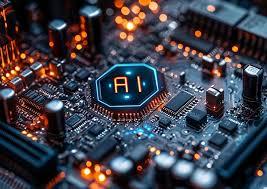
Artificial intelligence is no longer limited to research labs or tech giants. By 2026, AI computing will be deeply embedded in startups, enterprises, data centers, edge devices, and even personal workstations. From generative models to real-time analytics and autonomous systems, the demand for powerful and efficient AI hardware has skyrocketed.
If you are planning infrastructure upgrades or launching AI-driven solutions, understanding the Best AI Hardware & Processors for Computing in 2026 is essential. This guide explores the leading processors shaping the future of AI performance, scalability, and efficiency.
Why AI Hardware Matters More Than Ever
Modern AI workloads are dramatically different from traditional computing tasks. Training large language models, running deep neural networks, and processing massive datasets require:
-
Parallel processing power
-
High memory bandwidth
-
Low-latency interconnects
-
Energy-efficient performance
Standard CPUs alone can no longer handle advanced AI workloads efficiently. Specialized processors—GPUs, AI accelerators, and custom silicon—are now at the center of next-generation computing.
1. NVIDIA AI GPUs: Dominating Large-Scale AI
When discussing AI hardware, NVIDIA continues to lead the industry. Their advanced GPUs are optimized for both AI training and inference.
Why NVIDIA Stands Out in 2026
-
Massive parallel architecture
-
CUDA ecosystem maturity
-
Optimized AI frameworks
-
High-speed NVLink connectivity
The NVIDIA H100 and its next-generation successors remain dominant in enterprise AI data centers. These GPUs are especially powerful for training large-scale transformer models and handling high-throughput AI inference workloads.
For companies building generative AI platforms, NVIDIA hardware often becomes the backbone of their infrastructure.
2. AMD AI Accelerators: High Performance with Competitive Efficiency
AMD has significantly expanded its AI footprint with powerful accelerators designed for data centers and cloud providers.
The AMD Instinct MI300 series integrates CPU and GPU capabilities into a unified architecture. This design improves performance efficiency and simplifies AI workload management.
Key Advantages
-
Strong memory bandwidth
-
Cost-effective scaling
-
Competitive performance per watt
-
Growing software ecosystem
In 2026, AMD is increasingly attractive for enterprises seeking AI performance without depending entirely on one vendor ecosystem.
3. Google TPUs: Optimized for AI at Scale
Google developed Tensor Processing Units (TPUs) specifically for AI tasks. Unlike traditional GPUs, TPUs are purpose-built for machine learning.
The Google TPU v5 powers many large-scale AI services within Google Cloud.
Why TPUs Excel
-
Matrix multiplication optimization
-
Energy-efficient training
-
Tight integration with TensorFlow
-
Cloud-native scalability
For organizations leveraging Google Cloud infrastructure, TPUs offer exceptional performance for deep learning training and inference.
4. Intel AI Solutions: Bridging CPU and AI Acceleration
Intel has restructured its AI strategy with specialized hardware that blends traditional processing and AI acceleration.
The Intel Gaudi 2 processor provides competitive AI training capabilities, particularly in data center environments.
Intel’s Strengths in 2026
-
Strong enterprise integration
-
Hybrid CPU-AI architectures
-
Reliable data center ecosystem
-
Improved AI software stacks
For organizations already deeply invested in Intel infrastructure, Gaudi processors present a practical AI upgrade path.
5. Apple Silicon: AI at the Edge
AI computing is not limited to massive data centers. Edge computing—running AI locally on devices—is expanding rapidly.
Apple has integrated powerful neural engines into its silicon chips. The Apple M3 chip includes advanced AI acceleration built directly into consumer hardware.
Why Apple Silicon Matters
-
Efficient on-device AI processing
-
Reduced cloud dependency
-
Strong energy efficiency
-
Seamless hardware-software integration
For developers building AI-powered mobile or desktop applications, Apple Silicon enables real-time inference without server reliance.
6. Custom AI Chips and Startups to Watch
Beyond tech giants, AI hardware innovation is accelerating among specialized chipmakers.
Cerebras Systems develops wafer-scale processors designed specifically for AI training. Their approach challenges traditional GPU scaling by maximizing on-chip memory and compute density.
Similarly, Graphcore focuses on Intelligence Processing Units (IPUs) tailored for AI-native workloads.
In 2026, custom silicon is becoming a strategic advantage for enterprises building proprietary AI models.
Key Trends Shaping AI Processors in 2026
The evolution of AI hardware is driven by several major trends:
1. Energy Efficiency as a Priority
AI models are growing larger, but energy costs are rising. Processors must deliver higher performance per watt to remain sustainable.
2. AI-Specific Architectures
General-purpose computing is giving way to AI-optimized silicon built specifically for matrix operations and neural networks.
3. Edge AI Expansion
From autonomous vehicles to smart devices, edge computing reduces latency and enhances data privacy.
4. Integrated AI Infrastructure
Future systems combine CPUs, GPUs, NPUs, and custom accelerators into unified architectures for seamless AI deployment.
Choosing the Best AI Hardware for Your Needs
The best processor depends on your workload:
-
Large-scale model training → High-end GPUs or wafer-scale AI chips
-
Cloud-based AI services → TPUs or enterprise accelerators
-
Enterprise analytics → Hybrid CPU-AI solutions
-
Edge applications → AI-integrated system-on-chip designs
Budget, scalability, ecosystem support, and long-term vendor stability should also influence your decision.
Final Thoughts: Building the AI Infrastructure of Tomorrow
The race for AI dominance in 2026 is no longer just about algorithms—it is about hardware innovation. The Best AI Hardware & Processors for Computing in 2026 combine speed, efficiency, scalability, and ecosystem integration.
Organizations that invest strategically in advanced AI processors today will gain a competitive edge in automation, analytics, and intelligent product development tomorrow.

 English
 Arabic
 French
 Spanish
 Portuguese
 Deutsch
 Turkish
 Dutch
Dutch
 Italiano
 Romaian
 Portuguese (Brazil)
 Greek
Greek