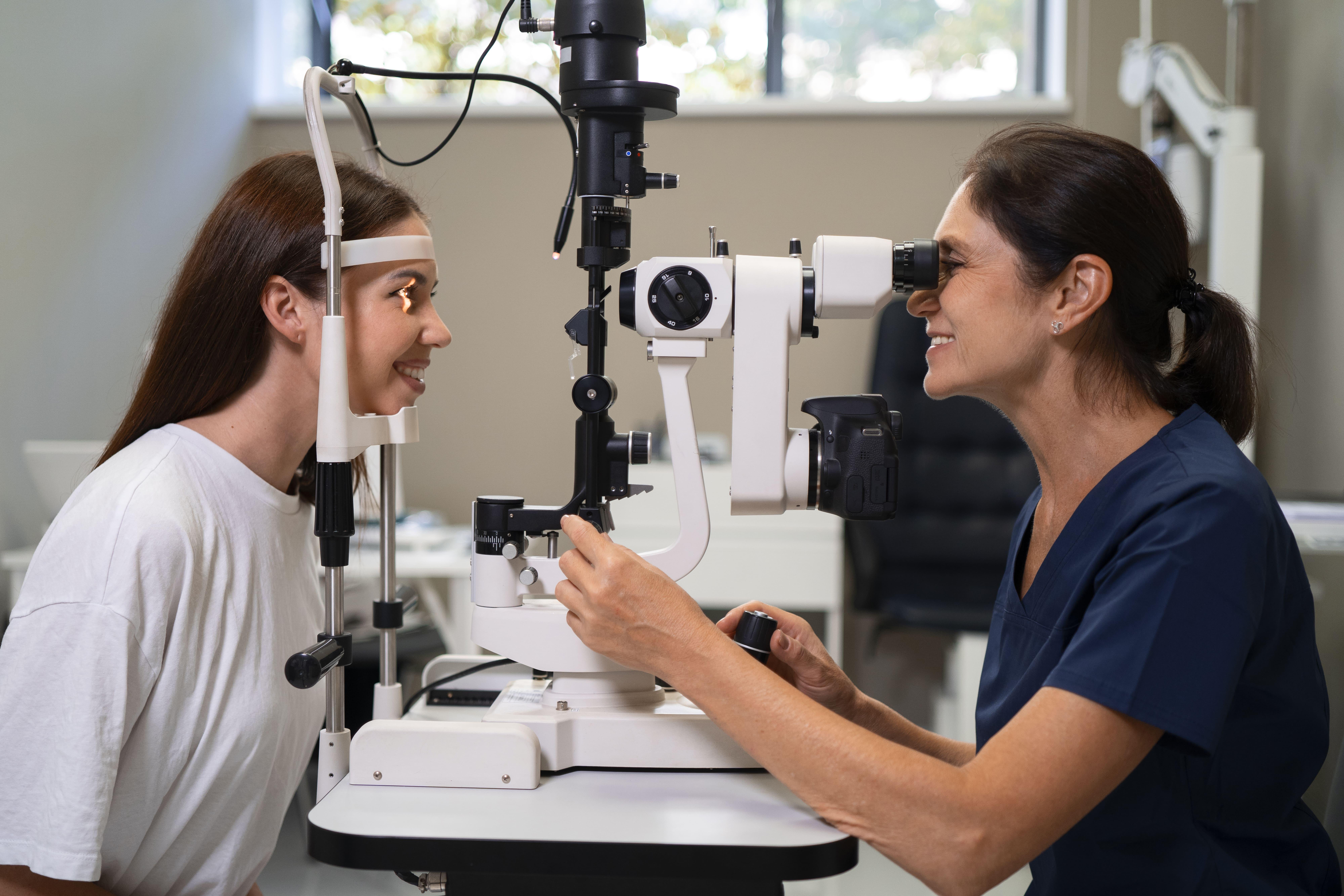
Eye care services are no longer confined to a single clinic or hospital. Modern eye care providers increasingly operate across multiple locations, including satellite clinics, optical retail outlets, mobile screening units, corporate health camps, and community outreach programs. This shift is driven by growing patient demand, the need to improve accessibility, and the desire to deliver consistent care across diverse settings. To support these distributed models, clinics require diagnostic systems that are flexible, reliable, and easy to deploy in different environments.
Compact diagnostic systems have emerged as a key enabler of multi-location eye care. Their portability, ease of setup, and consistent performance allow practitioners to maintain high clinical standards regardless of where examinations are conducted. As eye care networks expand, these systems play a crucial role in ensuring uniform service quality.
Challenges of Delivering Consistent Care Across Locations
Operating across multiple locations presents unique challenges for eye care providers. Variations in space availability, infrastructure, staffing, and patient volume can affect the consistency of diagnostic outcomes. Traditional bulky equipment is often impractical to move between sites, leading to differences in testing methods and data quality.
Compact diagnostic systems help overcome these challenges by standardizing the examination process. When the same type of equipment is used across all locations, practitioners can rely on uniform measurement protocols and comparable results. This consistency is essential for accurate diagnosis, follow-up care, and long-term patient management, especially for individuals who visit different branches of the same practice.
Flexibility for Diverse Clinical Environments
One of the primary advantages of compact diagnostic systems is their adaptability to a wide range of clinical settings. From fully equipped urban clinics to temporary vision screening camps, these devices are designed to function reliably without extensive setup requirements. Their smaller footprint allows them to fit comfortably into limited spaces, making them ideal for shared facilities or pop-up clinics.
This flexibility enables eye care providers to extend services into underserved areas without compromising diagnostic quality. Whether operating in a school, workplace, or rural community center, compact systems support professional-grade assessments while minimizing logistical complexity.
Streamlining Workflow Across Multiple Sites
Efficient workflow management becomes increasingly important as practices expand to multiple locations. Compact diagnostic systems simplify daily operations by reducing setup time, minimizing manual adjustments, and offering intuitive user interfaces. Staff can be trained more easily, as the same equipment and procedures are used across all sites.
Streamlined workflows help reduce patient waiting times and improve throughput, which is particularly valuable in high-volume or temporary screening environments. By ensuring that examinations can be conducted quickly and accurately, compact systems support smoother operations and better utilization of clinical resources across the entire network.
Ensuring Diagnostic Accuracy and Reliability
Maintaining diagnostic accuracy is a top priority for any eye care practice, regardless of location. Advances in optical engineering and digital technology have enabled compact diagnostic systems to deliver precise and repeatable results. These systems are designed to perform consistently even when used in different environments or by different operators.
The integration of a handheld auto refractometer into multi-location workflows demonstrates how compact devices can support objective and reliable measurements without the need for large, fixed installations. Such tools help practitioners achieve dependable outcomes while maintaining mobility and flexibility across locations.
Enhancing Patient Experience and Trust
Patients expect the same level of care and professionalism regardless of where they receive services. Compact diagnostic systems contribute to a positive patient experience by creating uncluttered, comfortable examination environments. Smaller equipment can make patients feel more at ease, particularly in non-traditional settings where anxiety may be higher.
Consistency in testing methods also builds patient trust. When individuals receive similar examination experiences and results across different locations, they are more likely to feel confident in the quality of care provided. This trust is essential for patient retention and long-term engagement with multi-location eye care practices.
Supporting Centralized Data and Follow-Up Care
Multi-location eye care often relies on centralized data management to track patient history and support follow-up care. Compact diagnostic systems are typically designed to integrate with digital record-keeping platforms, allowing examination data to be stored, shared, and reviewed across locations.
This connectivity ensures that practitioners at any branch can access accurate patient information, enabling continuity of care. It also supports data-driven decision-making, helping providers identify trends, monitor outcomes, and maintain quality control across the entire network.
Cost-Effective Expansion for Growing Practices
Expanding to multiple locations requires careful financial planning. Compact diagnostic systems offer a cost-effective solution by reducing the need for large infrastructure investments. Their lower space requirements and ease of transport minimize setup costs, making it easier for practices to scale operations.
For growing eye care networks, this affordability supports strategic expansion without sacrificing diagnostic capabilities. Practices can deploy standardized equipment across new locations quickly, ensuring that growth does not come at the expense of quality.
The Future of Distributed Eye Care
As healthcare delivery continues to evolve, multi-location and mobile care models are expected to become even more prevalent. Compact diagnostic systems will play an increasingly important role in supporting these models by offering flexibility, accuracy, and operational efficiency.
By enabling consistent, high-quality vision assessments across diverse environments, these systems empower eye care providers to reach more patients while maintaining professional standards. In the future, their role will be central to building accessible, scalable, and patient-centered eye care networks.
Conclusion
Supporting multi-location eye care requires diagnostic solutions that balance mobility with precision. Compact diagnostic systems meet this need by delivering reliable performance, adaptable design, and consistent results across various settings. They streamline workflows, enhance patient experience, and enable cost-effective expansion for growing practices. As eye care continues to move beyond traditional clinic boundaries, these systems will remain essential for delivering dependable and accessible vision care wherever it is needed.

 Arabic
 French
 Spanish
 Portuguese
 Deutsch
 Turkish
 Dutch
Dutch
 Italiano
 Russian
 Romaian
 Portuguese (Brazil)
 Greek
Greek