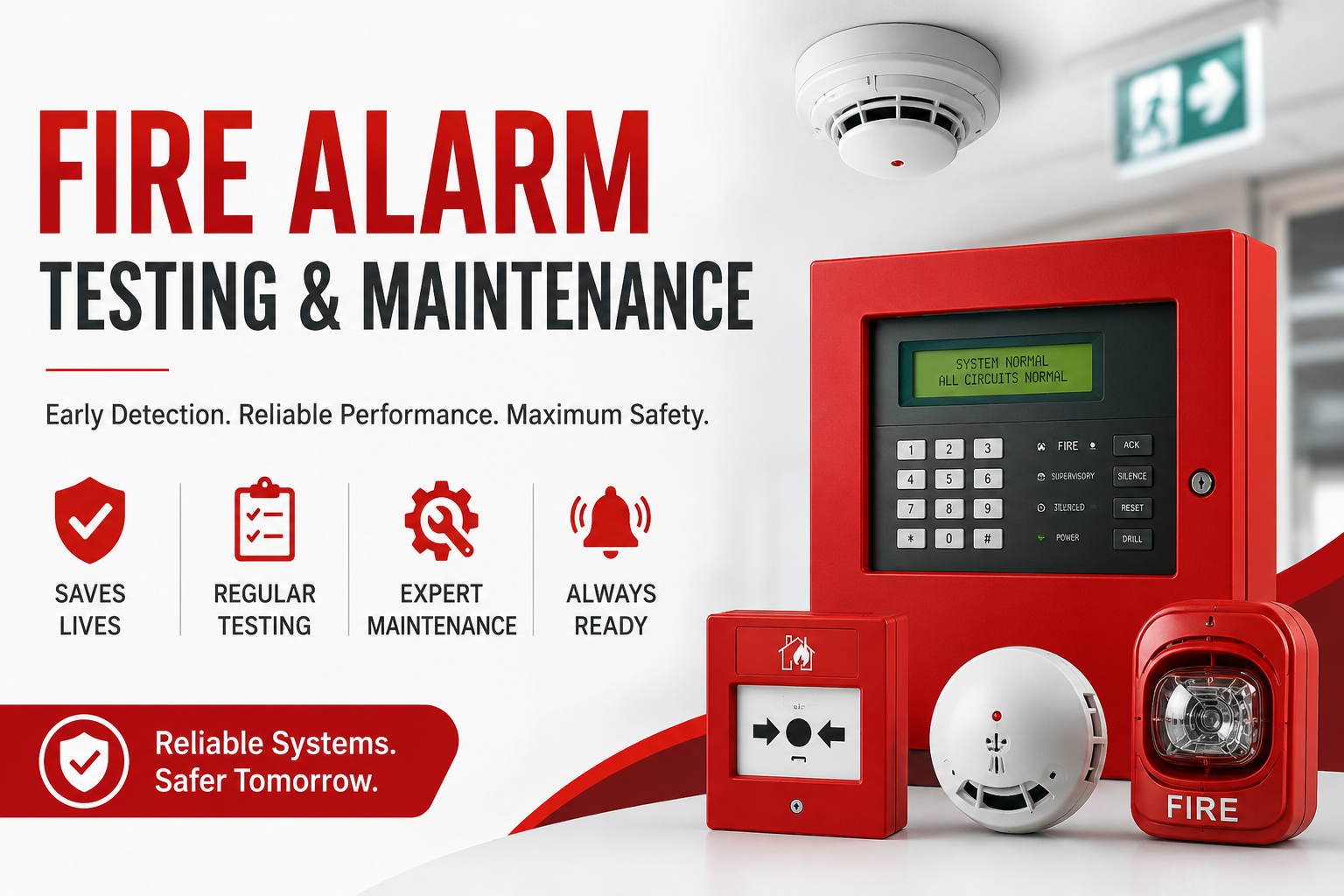
Early detection, accurate location, and reliable notification determine outcomes in a fire emergency—so understanding the difference between addressable and conventional Fire Alarm System architectures matters for design, maintenance, and operations. The choice affects how quickly responders identify the source, how easily maintenance locates faults, and how the system integrates with sprinklers, access control, and remote monitoring. Below is a practical, engineering-focused comparison to help facility managers, MEP consultants, and building owners choose the right approach.
What a Fire Alarm System does
A Fire Alarm System detects fire conditions using smoke, heat, aspirating, or multi-sensor detectors; processes inputs in a control panel; notifies occupants via horns, strobes, or voice-evac systems; and interfaces with suppression, elevators, and access control. Both conventional and addressable systems perform these core functions, but they differ in device identification, diagnostics, and zonal granularity.
Fundamental difference: device identity and granularity
- Conventional systems: Devices are wired into zones. When an alarm occurs the panel indicates only the zone (for example, “Zone 3 — West Wing”), not the exact device. Conventional is simple and cost-effective for small buildings or low-risk areas.
- Addressable systems: Each device has a unique address. When a detector triggers, the panel pinpoints the exact device and its location, simplifying response and maintenance—critical for commercial fire alarm systems and complex facilities.
How each architecture affects detection and response
- Speed to location: Addressable systems immediately show the precise device (room, corridor, or rack), reducing search time for responders. Conventional systems can require manual investigation of the entire zone.
- Diagnostics and maintenance: Addressable detectors report status and drift information, enabling targeted maintenance and predictive replacement. Conventional systems only show zone-level faults, increasing troubleshooting time.
- False-alarm management: Addressable multi-sensor detectors and drift reports help reduce nuisance alarms by enabling sensitivity adjustments and device masking. Conventional systems have fewer diagnostic levers to manage false positives.
Panel functions, zoning and system behavior
Addressable panels handle thousands of device addresses on loops and present event history and device diagnostics. They support phased evacuation, voice prioritization, and precise firefighter interfaces. Conventional panels manage zones and are limited for complex egress strategies. For facilities requiring phased evacuation, selective notification, or integrated building control, addressable panels are generally required by code or best practice.
Integration with suppression, BMS and monitoring
Both systems can interface with sprinklers, gas suppression, elevator recall, and access control, but addressable architectures enable finer control. For example, a fire in a single server rack can trigger localized action (shut down specific power circuits) while leaving other areas operational. Remote capabilities—fire alarm system remote monitoring and cloud-based panel management—work with both architectures, but addressable systems provide richer event data for analytics and predictive maintenance.
Applications and suitability
- Conventional systems: Suitable for small buildings, single-family house fire alarm system setups, or outbuildings where zoning is simple and device counts are low.
- Addressable systems: Appropriate for commercial office buildings, hospitals, data centres, shopping malls, airports, hotels, multi-residential complexes, and critical utility facilities where precise location, diagnostics, and integration are required.
- Wireless fire alarm system options: Wireless addressable devices exist and are effective for retrofits or heritage buildings when RF site surveys and supervised battery strategies are implemented.
Key features to compare
- Scalable architecture and loop capacity
- Smoke, heat, and multi-sensor detection availability
- Real-time alerts and device-level notifications
- Remote monitoring and mobile compatibility
- Integration capability with sprinklers, BMS, and access control
- User-friendly fire alarm system panel interfaces and event history
- Predictive maintenance support and false-alarm reduction
- Battery fire alarm systems and properly sized battery backup for fire alarm system runtimes
- Reliable 24/7 monitoring via central station or cloud services
Cost and lifecycle considerations
Upfront, conventional systems are typically less expensive for small installations due to simpler wiring and simpler panels. However, addressable systems deliver lower operational costs in medium-to-large buildings through easier maintenance, fewer false alarms, and reduced downtime. Lifecycle value should include installation, commissioning, ongoing AMC, software licensing, and integration costs—evaluate total cost of ownership, not just initial equipment price.
Buyer’s guide and procurement tips
- Assess building size, occupancy, and complexity first; this determines if addressable architecture is justified.
- Require detailed device counts, loop calculations, and battery sizing from your fire alarm system supplier.
- For wireless deployments, ensure supervised battery policies and RF surveys are included.
- Confirm compatibility with remote monitoring providers and central stations for dual-path reporting.
- Insist on full commissioning: device sensitivity tests, loop continuity checks, and fire authority acceptance.
- Prefer suppliers with project references for similar commercial fire alarm systems and documented maintenance offerings.
Common mistakes to avoid
- Choosing conventional for complex buildings to save initial cost, then later facing expensive retrofits.
- Failing to size batteries and backup appropriately for alarm and supervision runtimes.
- Overlooking diagnostic needs—conventional systems can mask progressive detector drift until a critical failure.
- Ignoring open-protocol compatibility if long-term integration with BMS or future upgrades is planned.
- Skipping RF surveys for wireless addressable devices, leading to coverage gaps.
Practical recommendation
For small single-zone sites or basic residential applications, a conventional or house fire alarm system can be satisfactory. For commercial, critical, or large multi-zone environments, addressable systems are the professional choice: they improve detection accuracy, reduce response times, simplify maintenance, and support advanced integrations and remote services.
For project-specific design and compliant Fire alarm system installation, work with experienced vendors who provide loop and battery calculations, site surveys, commissioning, and long-term maintenance plans to ensure the chosen architecture delivers reliable detection, regulatory compliance, and resilient life-safety performance.
Conclusion
Addressable and conventional Fire Alarm System architectures both achieve core life-safety tasks, but they differ fundamentally in device identification, diagnostics, and operational value. Addressable systems provide precise location, advanced diagnostics, and integration flexibility—making them the preferred solution for commercial and critical facilities—while conventional systems remain cost-effective for small, simple installations. Choose based on building complexity, occupancy risk, and long-term lifecycle value to ensure accurate detection, efficient response, and robust fire safety infrastructure.

 Arabic
 French
 Spanish
 Portuguese
 Deutsch
 Turkish
 Dutch
Dutch
 Italiano
 Russian
 Romaian
 Portuguese (Brazil)
 Greek
Greek