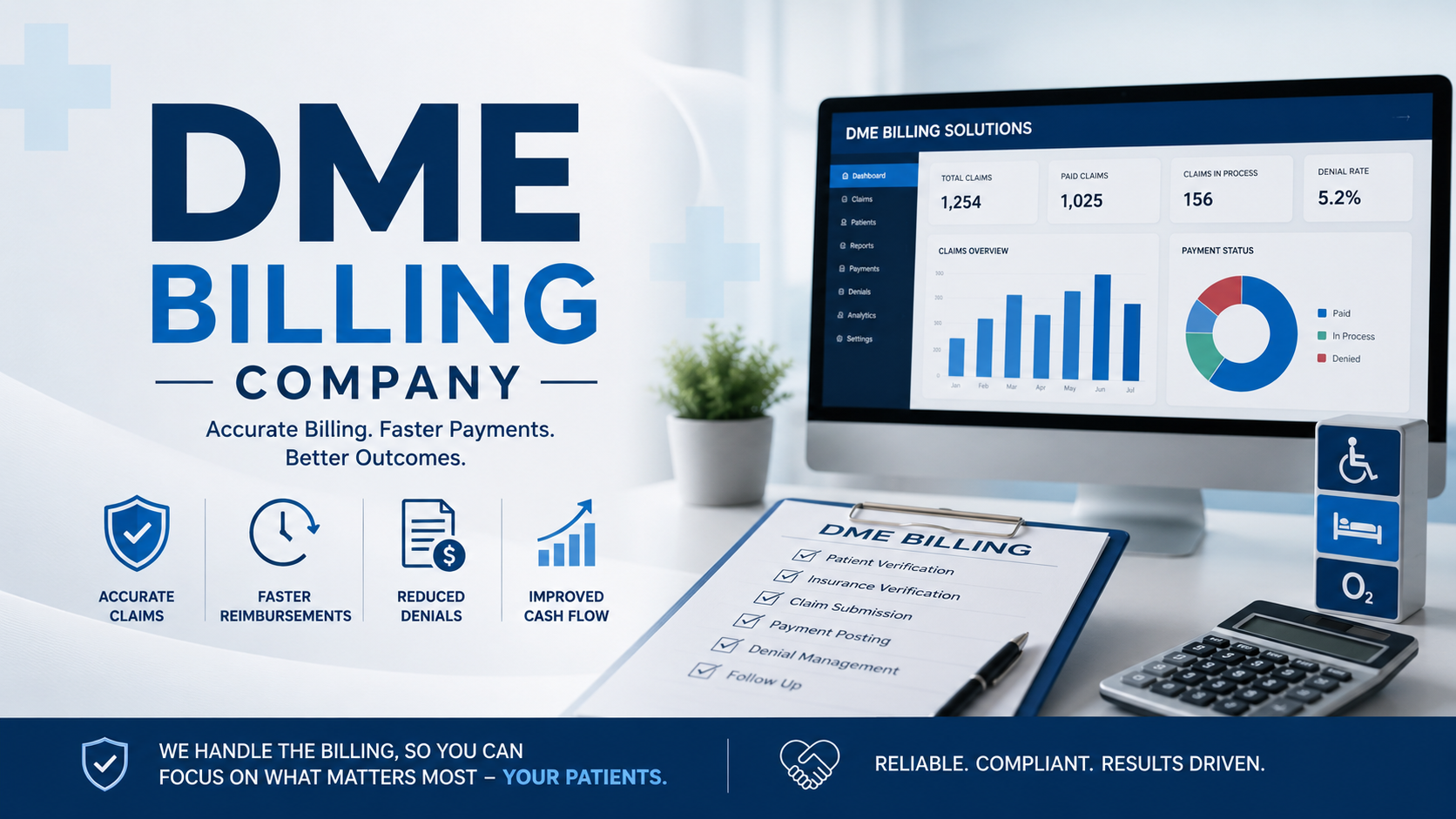
The durable medical equipment (DME) industry plays a vital role in patient care by providing essential medical devices that support recovery, mobility, and long-term health management. From wheelchairs and oxygen equipment to hospital beds and diabetic supplies, DME providers help patients maintain a better quality of life outside traditional healthcare settings. However, managing billing and reimbursement for these products can be challenging due to complex regulations, changing payer requirements, and extensive documentation needs.
This is where DME billing solutions become indispensable. By streamlining claims processing, ensuring compliance, and improving reimbursement accuracy, these solutions help DME suppliers maintain financial stability while focusing on patient care.
Understanding DME Billing Solutions
DME billing solutions refer to specialized billing services, software platforms, and revenue cycle management strategies designed specifically for durable medical equipment providers. These solutions address the unique challenges associated with DME claims, including prior authorizations, medical necessity documentation, coding accuracy, and payer-specific guidelines.
Unlike standard medical billing, DME billing requires careful attention to equipment classifications, rental versus purchase rules, Medicare regulations, and ongoing patient eligibility verification. A comprehensive billing solution helps providers manage these requirements efficiently while reducing claim denials and payment delays.
The primary objective of DME billing solutions is to optimize reimbursement while maintaining compliance with federal and private insurance regulations.
Common Challenges in DME Billing
DME providers face numerous billing obstacles that can negatively impact cash flow and operational efficiency. Understanding these challenges highlights the importance of implementing effective billing solutions.
Complex Documentation Requirements
Insurance companies and government payers often require extensive documentation before approving DME claims. Providers must submit physician orders, proof of medical necessity, patient evaluations, and supporting clinical records. Missing or incomplete documentation can lead to claim denials.
Frequent Policy Changes
Medicare, Medicaid, and commercial insurers regularly update their reimbursement policies and coverage criteria. Staying current with these changes can be difficult for in-house billing teams, increasing the risk of non-compliance.
Coding Errors
Accurate HCPCS coding is essential for DME reimbursement. Even minor coding mistakes can result in denied claims, delayed payments, or audits. Providers must ensure that billing staff remain updated on coding guidelines and payer requirements.
Prior Authorization Delays
Many DME items require prior authorization before delivery. Delays in obtaining approvals can slow down patient service and postpone reimbursement.
High Denial Rates
Claim denials are common in the DME industry due to documentation deficiencies, coding issues, eligibility problems, and authorization errors. Resolving denied claims requires additional resources and can significantly impact revenue.
Key Features of Effective DME Billing Solutions
A reliable DME billing solution incorporates multiple processes and technologies designed to improve claim accuracy and maximize collections.
Eligibility Verification
Insurance eligibility verification is the first step in reducing claim denials. Billing solutions help confirm patient coverage, benefit limitations, deductible status, and authorization requirements before equipment is dispensed.
Accurate Coding and Claim Submission
Professional DME billing solutions ensure the correct use of HCPCS codes, modifiers, and billing guidelines. Accurate coding reduces claim rejections and improves first-pass claim acceptance rates.
Documentation Management
Efficient documentation management systems organize and track required records, ensuring that all supporting documents are available when claims are submitted or audited.
Denial Management
Denial management is a critical component of revenue cycle optimization. Billing specialists review denied claims, identify root causes, correct errors, and resubmit claims promptly to recover lost revenue.
Compliance Monitoring
Healthcare regulations continue to evolve, making compliance a top priority. DME billing solutions help providers stay aligned with Medicare requirements, payer policies, and industry standards.
Reporting and Analytics
Advanced reporting tools provide insights into claim performance, reimbursement trends, denial rates, and accounts receivable. These analytics help providers make informed business decisions and improve operational efficiency.
Benefits of Implementing DME Billing Solutions
Investing in specialized DME billing solutions can deliver substantial financial and operational benefits for equipment suppliers.
Faster Reimbursements
Efficient billing processes accelerate claim submission and payment cycles. Faster reimbursements improve cash flow and provide financial stability for growing DME businesses.
Reduced Claim Denials
Accurate coding, eligibility verification, and proper documentation significantly lower denial rates. Fewer denials mean less administrative work and higher revenue realization.
Improved Compliance
Regulatory compliance reduces the risk of audits, penalties, and reimbursement recoupments. Billing experts stay updated on payer regulations and implement best practices to protect providers from compliance issues.
Increased Staff Productivity
Outsourcing billing tasks or using specialized software allows internal staff to focus on patient service, inventory management, and business development rather than administrative paperwork.
Better Patient Experience
When billing processes operate smoothly, patients receive equipment faster and encounter fewer insurance-related delays. Improved patient satisfaction can strengthen provider reputation and customer retention.
Enhanced Revenue Cycle Performance
A comprehensive billing solution supports every stage of the revenue cycle, from patient intake to final payment collection. This integrated approach helps maximize profitability while reducing operational inefficiencies.
Choosing the Right DME Billing Solutions Provider
Selecting the right billing partner is crucial for long-term success. Providers should evaluate several factors before making a decision.
Industry Experience
Look for billing professionals with extensive experience in DME billing and reimbursement management. Specialized expertise can significantly improve claim outcomes.
Technology Capabilities
Modern billing solutions should offer electronic claim submission, reporting dashboards, denial tracking, and secure document management systems.
Compliance Expertise
The provider should demonstrate strong knowledge of Medicare regulations, payer guidelines, and industry compliance standards.
Transparent Communication
Regular reporting and open communication help providers monitor billing performance and stay informed about reimbursement trends.
Scalable Services
As a DME business grows, billing needs become more complex. Choose a solution that can scale alongside organizational expansion without compromising service quality.
Frequently Asked Questions (FAQs)
What are DME billing solutions?
DME billing solutions are specialized services and technologies designed to manage billing, coding, claim submission, reimbursement tracking, and compliance for durable medical equipment providers.
Why is DME billing more complex than standard medical billing?
DME billing involves unique regulations, HCPCS coding requirements, prior authorizations, rental agreements, and extensive documentation standards that differ from traditional healthcare billing.
How do DME billing solutions reduce claim denials?
They improve coding accuracy, verify patient eligibility, ensure complete documentation, and monitor payer requirements to minimize common causes of claim denials.
Can small DME providers benefit from billing solutions?
Yes. Small providers often gain significant advantages through improved cash flow, reduced administrative workload, and access to specialized billing expertise.
What equipment categories are covered under DME billing?
Common categories include wheelchairs, oxygen equipment, CPAP devices, hospital beds, walkers, diabetic supplies, prosthetics, and other medically necessary equipment prescribed for home use.
Conclusion
Managing durable medical equipment claims requires specialized knowledge, accurate documentation, and continuous compliance with evolving payer regulations. Effective DME billing solutions help providers overcome reimbursement challenges, reduce denials, improve cash flow, and strengthen overall revenue cycle performance. By implementing the right billing strategy, DME suppliers can focus more on delivering quality patient care while maintaining financial stability. Partnering with experienced Medical Billing Services providers can further streamline operations, enhance reimbursement outcomes, and support sustainable business growth in the competitive healthcare landscape.

 English
 Arabic
 French
 Spanish
 Portuguese
 Deutsch
 Dutch
Dutch
 Italiano
 Russian
 Romaian
 Portuguese (Brazil)
 Greek
Greek