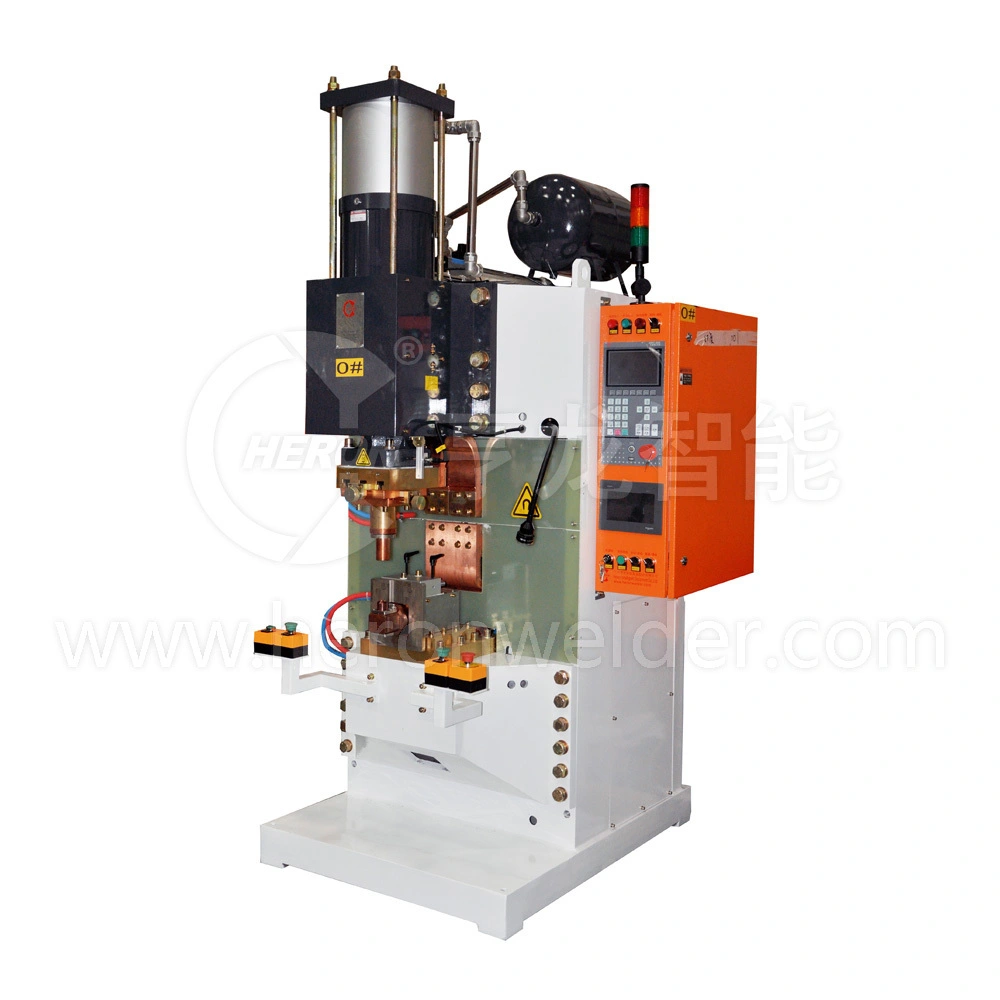
Spot welding equipment plays a critical role in today’s high-speed, high-precision manufacturing environments. From automotive body assembly lines to appliance production and metal fabrication workshops, spot welding remains one of the most efficient and widely used resistance welding methods for joining sheet metals.
For OEMs, automation integrators, and production engineers, selecting the right spot welding equipment is not just about joining metal—it is about improving production efficiency, ensuring weld consistency, reducing cycle time, and achieving long-term operational reliability.
This guide explores the principles, types, applications, selection criteria, and best practices for spot welding equipment, and explains how advanced industrial solutions from manufacturers like Heron Welder support modern smart factories.
What Is Spot Welding Equipment?
Spot welding equipment is a type of resistance welding system used to join two or more overlapping metal sheets by applying pressure and electrical current through copper alloy electrodes. The heat generated at the interface melts the metal locally, forming a “weld nugget” that solidifies under pressure.
Basic Working Principle
The process follows three core stages:
- Clamping Phase – Electrodes apply force to hold the sheets together.
- Welding Phase – High current passes through the workpiece, generating heat due to electrical resistance.
- Forging and Cooling Phase – Pressure is maintained while the molten metal solidifies, forming a strong joint.
This process is extremely fast, typically completed in milliseconds to a few seconds, making it ideal for mass production.
Types of Spot Welding Equipment
Modern manufacturing requires different types of spot welding systems depending on material, thickness, and automation level.
1. Manual Spot Welding Machines
These are handheld or pedestal-based systems used for low-volume production, repair work, or small fabrication shops. They offer flexibility but limited automation.
2. Pneumatic Spot Welding Equipment
Pneumatically driven systems provide consistent electrode force and are widely used in medium-scale production lines. They are suitable for steel sheet welding in automotive and appliance manufacturing.
3. MFDC Spot Welding Systems
Medium Frequency Direct Current (MFDC) spot welding equipment is highly efficient and widely used in modern factories.
Key advantages include:
- Lower energy consumption
- Better weld consistency
- Reduced transformer size
- Improved control over welding parameters
4. Robotic Spot Welding Guns
Integrated with industrial robots, these systems are essential for automated assembly lines, especially in automotive manufacturing. They ensure precision, repeatability, and high-speed operation.
5. Capacitor Discharge Spot Welding Equipment
These systems release stored energy in a very short time, ideal for thin materials, electronic components, and precision assemblies.
Key Applications of Spot Welding Equipment
Spot welding is used across multiple industries due to its speed, efficiency, and cost-effectiveness.
Automotive Industry
- Car body frames
- Doors, panels, and chassis components
- EV battery assemblies
Home Appliances
- Refrigerators
- Washing machines
- Air conditioner panels
Electrical and Electronics
- Battery tabs
- Metal enclosures
- Small precision components
Metal Fabrication
- Sheet metal assemblies
- Industrial enclosures
- Structural components
The versatility of spot welding equipment makes it a backbone technology in mass production environments.
Advantages of Using Spot Welding Equipment
For production engineers and plant managers, spot welding offers several critical benefits:
High Production Speed
Spot welding is extremely fast, making it ideal for automated production lines where cycle time is critical.
Low Consumable Cost
Unlike other welding methods, spot welding does not require filler materials or shielding gases.
Strong and Clean Joints
The weld is localized, reducing distortion and maintaining surface finish.
Easy Automation Integration
Spot welding systems can be easily integrated with robotic arms and production lines.
Energy Efficiency
Advanced MFDC systems significantly reduce energy consumption compared to traditional AC systems.
Spot Welding Equipment vs Other Welding Methods
Understanding how spot welding compares to other joining techniques helps in selecting the right solution.
Spot Welding vs MIG Welding
- Spot welding: Faster, cleaner, ideal for sheet metals
- MIG welding: More versatile for thicker materials and structural welding
Spot Welding vs Laser Welding
- Spot welding: Cost-effective, robust for high-volume production
- Laser welding: Higher precision but more expensive and complex
Spot Welding vs Riveting/Mechanical Fastening
- Spot welding: Permanent, faster, no additional hardware
- Riveting: Useful for dissimilar materials but slower and more labor-intensive
Key Factors to Consider When Choosing Spot Welding Equipment
Selecting the right system requires careful evaluation of production needs and material characteristics.
1. Material Type and Thickness
Different metals such as mild steel, stainless steel, or aluminum require different current levels and electrode designs.
2. Production Volume
High-volume production lines benefit from robotic or MFDC systems, while small workshops may prefer manual or pneumatic machines.
3. Automation Level
Integration with robots and PLC systems is essential for smart manufacturing environments.
4. Electrode Design and Cooling System
Efficient electrode cooling ensures longer tool life and consistent weld quality.
5. Energy Efficiency Requirements
Modern factories increasingly prefer MFDC systems for reduced energy consumption and improved weld control.
Best Practices for Efficient Spot Welding
To achieve high-quality welds and maximize equipment lifespan, manufacturers should follow these best practices:
Maintain Proper Electrode Condition
Regular dressing and replacement of electrodes prevent weld defects.
Optimize Welding Parameters
Correct current, time, and pressure settings ensure strong and consistent welds.
Use Adequate Cooling Systems
Water-cooled electrodes and transformers improve stability in continuous production.
Implement Routine Maintenance
Scheduled inspection of cables, transformers, and pneumatic systems reduces downtime.
Train Operators and Technicians
Proper training ensures safe and efficient operation of spot welding equipment.
Heron Welder: Advanced Spot Welding Equipment Solutions
Heron Welder is a global manufacturer specializing in resistance welding technologies, offering advanced spot welding equipment designed for industrial-scale production.
Their solutions are engineered for:
- Automotive manufacturing lines
- Appliance production systems
- High-precision metal joining applications
- Fully automated welding production lines
With a strong focus on innovation, Heron Welder integrates MFDC technology, robotic welding systems, and intelligent controllers to help manufacturers achieve higher productivity and consistent weld quality.
Whether you need standalone spot welding machines or fully integrated automation systems, Heron provides customized engineering solutions tailored to production requirements.
Future Trends in Spot Welding Technology
The spot welding industry is evolving rapidly with advancements in automation and digital manufacturing.
Smart Welding Systems
Integration of IoT and real-time monitoring allows predictive maintenance and quality tracking.
AI-Based Welding Control
Artificial intelligence is being used to optimize welding parameters automatically for different materials.
Lightweight Material Welding
With the rise of EV manufacturing, spot welding systems are being optimized for aluminum and mixed-material structures.
Fully Automated Production Lines
Factories are moving toward fully robotic welding cells with minimal human intervention.
Conclusion
Spot welding equipment remains a cornerstone of modern industrial manufacturing. Its speed, efficiency, and adaptability make it essential for high-volume production environments across automotive, appliance, and metal fabrication industries.
By choosing advanced systems and maintaining best practices, manufacturers can significantly improve productivity, weld quality, and operational efficiency.
Heron Welder continues to support global manufacturers with innovative, high-performance spot welding equipment designed for the future of automated production.
FAQs
1. What materials can spot welding equipment join?
Spot welding equipment is commonly used for mild steel, stainless steel, and certain aluminum alloys, depending on machine capability.
2. Is spot welding suitable for automated production lines?
Yes, modern spot welding systems are highly compatible with robotic arms and fully automated manufacturing lines.
3. What is the difference between AC and MFDC spot welding equipment?
MFDC systems offer higher efficiency, better control, and lower energy consumption compared to traditional AC systems.
4. How long does a spot weld take?
A typical spot weld is completed within milliseconds to a few seconds depending on material thickness and machine settings.
5. How can weld quality be improved in spot welding?
Weld quality can be improved by maintaining electrode condition, optimizing welding parameters, and using stable power supply systems.
Call to Action
If you are looking to upgrade your production line with high-performance, reliable, and automation-ready spot welding equipment, Heron Welder offers customized solutions tailored to your manufacturing needs. Contact their engineering team to request a quote or discuss your specific welding application and discover how advanced resistance welding technology can transform your production efficiency.

 Arabic
 French
 Spanish
 Portuguese
 Deutsch
 Turkish
 Dutch
Dutch
 Italiano
 Russian
 Romaian
 Portuguese (Brazil)
 Greek
Greek