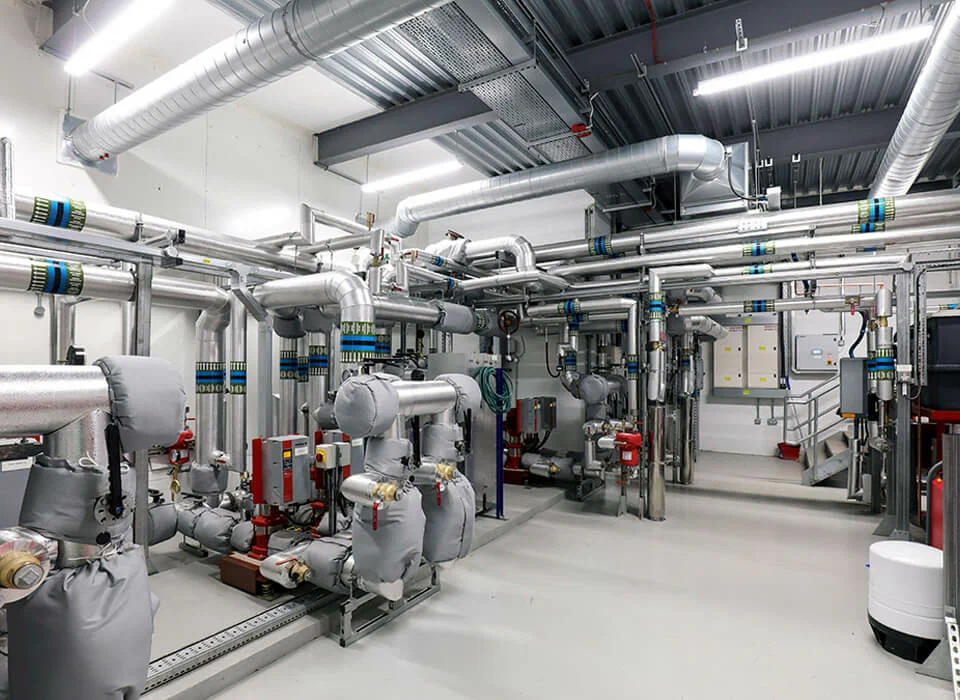
This article explains how experienced estimators approach mechanical scopes, why errors happen so often on HVAC and piping systems, and how accurate early analysis protects budgets and schedules. It shares real project insight to help contractors and developers manage risk on mechanical-heavy jobs.
Getting Mechanical Costs Right Before They Become a Problem
Mechanical systems rarely get the attention they deserve during early pricing, yet they’re often the first scope to blow a budget. HVAC, piping, and controls are complex, tightly coordinated, and sensitive to design changes. When numbers are rushed or based on assumptions, the fallout shows up fast in the field.
That’s why Mechanical Estimating deserves a disciplined approach from the start. When mechanical scopes are loosely defined, the mechanics used to price them can miss labor realities, coordination gaps, or equipment constraints. The result is familiar: bids that look competitive on paper but struggle once installation begins.
Contractors and developers feel the pressure early. Drawings are incomplete. Design intent is still evolving. Owners want pricing to move forward. The solution isn’t guesswork or blanket allowances. It’s a structured estimating process grounded in how mechanical systems are actually installed, tested, and coordinated on real jobsites.
Why Mechanical Scopes Are So Often Underestimated
Mechanical work touches almost every part of a building. Ductwork competes for space with structure and electrical. Piping routes shift as ceilings tighten. Equipment selections change as energy requirements evolve. Each adjustment affects material quantities and labor hours.
Common estimating issues include:
-
Incomplete equipment schedules
-
Missing details on risers and shafts
-
Unrealistic labor productivity assumptions
-
Limited allowance for coordination and rework
These aren’t minor oversights. On a mid-sized commercial project, a small miss in ductwork quantities or piping labor can translate into six figures once the job is underway.
How Experienced Estimators Read Mechanical Drawings
Good mechanical estimating starts with how drawings are reviewed. Experienced estimators don’t just measure what’s shown; they question what’s missing. If a mechanical room looks tight, they factor in access challenges. If ceiling spaces are congested, they account for slower installation rates.
Take HVAC ductwork as an example. Square footage alone doesn’t tell the full story. Estimators break duct systems into sizes, shapes, and installation heights. They consider insulation types, hangers, fire dampers, and access panels. Each detail affects labor and material costs.
Mechanical Estimating That Accounts for Field Reality
Labor Is the Biggest Variable
Material pricing is relatively straightforward compared to labor. Crew productivity depends on site conditions, sequencing, and coordination with other trades. Estimators who rely on generic labor factors often underprice complex installations.
Coordination Time Matters
Mechanical systems rarely install cleanly without adjustments. Coordination meetings, layout revisions, and field modifications all take time. Ignoring this effort during estimating sets crews up for overtime later.
Equipment Isn’t Plug-and-Play
Large mechanical equipment brings rigging, access planning, and startup requirements. These tasks carry costs that aren’t always obvious on drawings but show up quickly in the field.
The Role of Mechanical Estimating in Project Planning
Mechanical costs influence more than just the MEP budget. They affect ceiling heights, structural framing, electrical routing, and even architectural layouts. Early estimating helps teams understand where pressure points exist before design decisions are locked in.
When mechanical estimates are realistic, coordination improves. Designers can adjust layouts. Contractors can plan sequences. Owners gain confidence that budgets reflect how the building will actually perform.
Case Study: Office Renovation in Dallas, Texas
A general contractor bid on a three-story office renovation in downtown Dallas. The mechanical scope included new air handlers, duct distribution, and upgraded controls. The initial estimate was based on preliminary drawings and a tight bid timeline.
During construction, several issues emerged. Ceiling spaces were more constrained than anticipated due to the existing structure. Duct routing required additional offsets and fittings. Labor hours increased, and installation slowed. The project faced cost overruns and schedule pressure as crews worked around conflicts.
Midway through the job, the contractor engaged a professional estimating firm to reassess remaining phases and identify savings. The revised estimate detailed ductwork by size and elevation, adjusted labor rates, and flagged coordination risks early. With clearer cost insight, the team resequenced work and avoided further losses.
The lesson wasn’t that the contractor lacked experience. It was that mechanical estimating requires time, focus, and detailed analysis, especially on renovation projects where unknowns are common.
Mechanical Estimating and Risk Management
Mechanical scopes carry a higher risk because changes ripple through multiple systems. A revised air handler size affects ductwork, electrical loads, and controls. Estimators who identify these connections early help teams manage risk instead of reacting to it.
This is where professional support adds value. Estimators who specialize in mechanical work understand where designs typically evolve and price those areas accordingly.
When to Consider Outside Mechanical Estimating Support
Not every project needs outsourced estimating, but certain conditions increase the benefit:
-
Complex HVAC systems
-
Tight urban sites
-
Renovations with limited as-built information
-
Fast-track schedules
Outside estimators provide an independent review that often catches scope gaps internal teams miss when under time pressure.
Building a Strong Mechanical Estimate Step by Step
A reliable mechanical estimate follows a clear workflow:
-
Review drawings and specifications for scope clarity
-
Perform detailed takeoffs by system and component
-
Apply labor rates based on installation conditions
-
Add coordination, testing, and startup allowances
-
Document assumptions and exclusions clearly
This approach doesn’t slow bidding; it strengthens it.
Why Accurate Mechanical Estimates Improve Bids
When mechanical numbers are solid, bids become more defensible. Contractors can explain pricing with confidence. Owners see transparency instead of surprises. Projects start with aligned expectations instead of hidden risk.
Accurate estimates also support scheduling. Knowing realistic installation durations helps avoid stacked trades and overtime later.
The Long-Term Value of Getting Mechanical Costs Right
Mechanical systems impact building performance for decades. Poor estimating doesn’t just hurt construction budgets; it affects maintenance, energy use, and occupant comfort. Early accuracy supports better decisions that last beyond project closeout.
Conclusion: Mechanical Estimating as a Foundation for Success
Mechanical estimating isn’t about chasing low numbers. It’s about understanding how systems are built and pricing them accordingly. When estimates reflect real installation conditions, projects run smoother, margins hold, and teams avoid costly surprises.
If you’re facing a project with complex mechanical systems and want reliable cost insight before committing, ALM Estimating provides experienced estimating support built around accuracy, coordination awareness, and real construction knowledge. Reaching out early can help you control costs, protect schedules, and reduce risk long before crews mobilize.

 English
 French
 Spanish
 Portuguese
 Deutsch
 Turkish
 Dutch
Dutch
 Italiano
 Russian
 Romaian
 Portuguese (Brazil)
 Greek
Greek